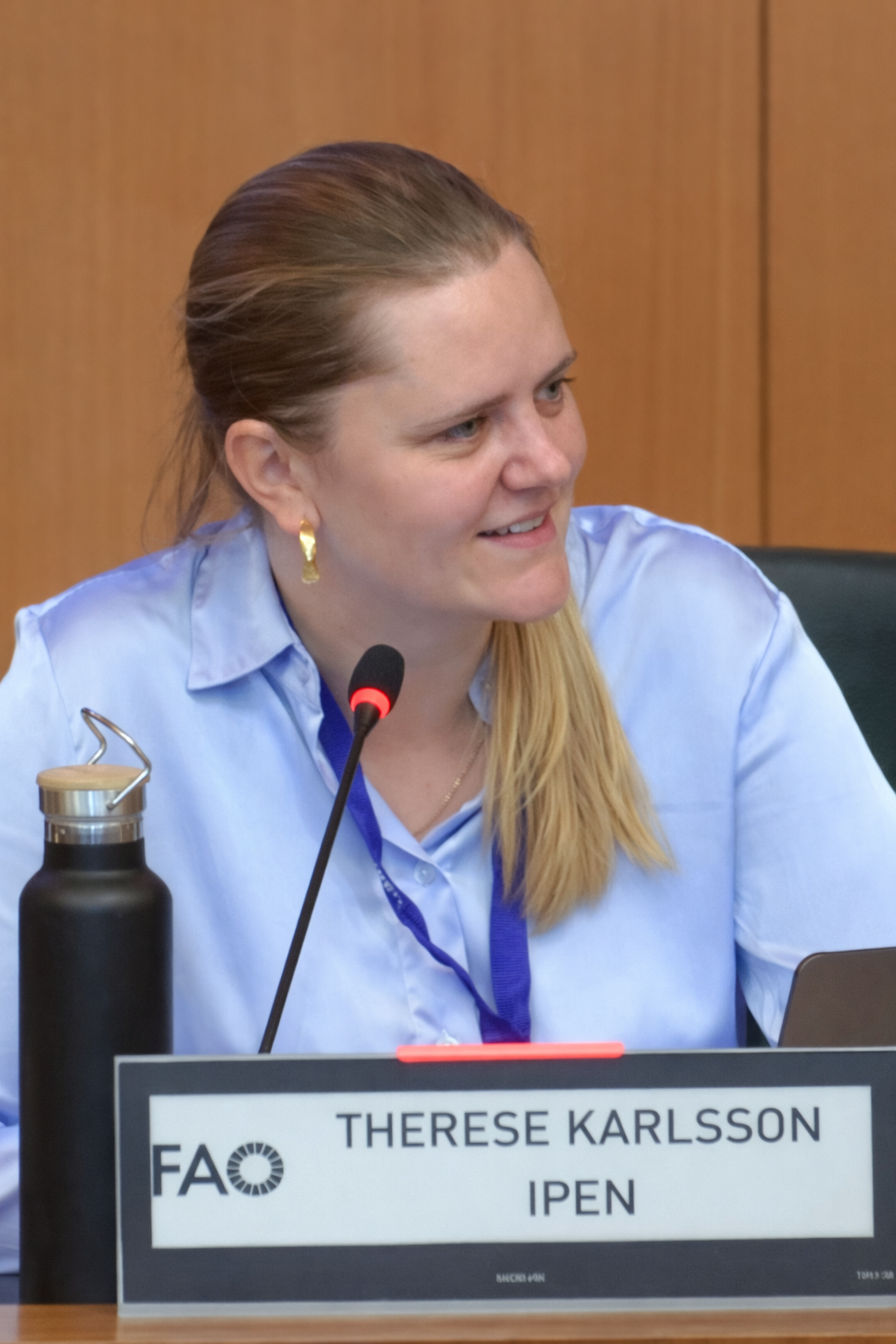


This blog post draws on the presentation and remarks of Dr Therese Karlsson, Science and Technical Advisor, IPEN, delivered during the GGKP webinar Activity Options for Action Plans on Cross-Cutting Issues of Specific Stockholm Convention Articles, held on 24 February 2026.
Persistent organic pollutants (POPs) remain among the most hazardous chemicals in the global environment. Because they persist, accumulate in living organisms and travel long distances, their impacts are often not immediately visible, yet they can spread widely through ecosystems and food chains. Raising awareness of these risks is therefore an essential part of implementing the Stockholm Convention and strengthening chemicals management.
Civil society organizations play an important role in translating scientific knowledge into accessible information that supports policymaking and public understanding. Through research, monitoring and communication, awareness-raising initiatives help bridge the gap between science, policy and communities affected by chemical pollution.
Bridging science and policy
The International Pollutants Elimination Network (IPEN) is a global network of nearly 700 organizations working in more than 130 countries towards a toxics-free future. IPEN was created during the negotiations that led to the Stockholm Convention and has been working on POPs ever since.
The network’s activities include participating in the evaluation of new POPs under the Convention, conducting studies on POPs in products and waste, and producing policy briefs and reports.
“In all the work that we do, what we really try to achieve is to bridge science and policy, and to bridge local and global perspectives.” – Dr Therese Karlsson
To support its goal, IPEN develops guidance materials on newly proposed POPs ahead of policy meetings. These resources are designed to make complex scientific information more accessible to policymakers and stakeholders. The organization also publishes reports and briefs that can support countries as they develop or update their National Implementation Plans (NIPs) and related action plans.
Monitoring POPs in the food chain
One of IPEN’s most widely known awareness-raising initiatives involves monitoring free-range chicken eggs. For more than two decades, the network and its partners have used eggs to measure POP contamination in local environments.
Eggs are particularly useful indicators because they reflect contamination within the local food chain. Studies have shown that eggs collected near waste burning or industrial activities can contain high levels of POPs, including dioxins. In some cases, concentrations were so high that a child eating a single egg could exceed the tolerable intake level for dioxins for several years.
Beyond illustrating the scale of contamination, these studies also provide practical insights into pollution sources and priorities for action. The findings demonstrate that open burning of waste can contaminate food with POPs and therefore needs to be prevented. They also highlight the importance of properly managing ash from waste incineration and strengthening the control of waste streams that contain POPs, such as those with brominated flame retardants and polychlorinated biphenyl (PCBs).
Certain waste management practices can unintentionally generate additional POPs, including dioxins, which further underscores the need for improved waste handling. The results also point to the importance of investigating and securing contaminated sites to prevent continued environmental releases.
Addressing brominated dioxins
Recent research has also highlighted concerns about brominated dioxins, which share many of the toxic properties of chlorinated dioxins. While chlorinated dioxins were among the first chemicals listed under the Stockholm Convention, brominated dioxins are still under evaluation.
Evidence suggests that brominated dioxins can contribute significantly to overall dioxin-like toxicity. Addressing this issue may require listing additional compounds under the Convention, improving waste management practices and preventing the recycling of plastics containing brominated compounds.
The research also highlights the importance of avoiding the export of electronic and plastic waste to countries with insufficient infrastructure to manage them safely, as treatment and disposal processes can release these hazardous substances.
POPs in plastics and consumer products
Plastics are another important focus of IPEN research because many POPs listed under the Stockholm Convention are used in plastic materials or found in plastic products.
Studies of beached plastic pellets from 23 countries found that all samples contained toxic chemicals, including PCBs and ultraviolet stabilizers such as UV-328. The results demonstrate that plastics can transport hazardous chemicals across long distances and that some regions carry a heavy burden of plastic pollution even though they are not major producers of plastics or chemicals.
Research on plastic toys from 10 countries has also revealed widespread contamination. All toys tested contained short-chain chlorinated paraffins (SCCPs) and medium-chain chlorinated paraffins (MCCPs). In several cases, these substances accounted for a significant share of the toy’s weight. At the same time, none of the toys were labelled to indicate the presence of toxic chemicals.
These findings highlight major challenges related to transparency and traceability in global product supply chains. Under the Stockholm Convention, countries are required to develop strategies for identifying products and waste that contain listed POPs. In practice, however, this can be difficult when information about chemical content is not available. Recycling practices can further complicate the issue, as plastics containing POPs may be recycled and incorporated into new products, including toys, thereby reintroducing hazardous chemicals into the market.
Improving transparency and managing POPs waste
Improving transparency across supply chains is essential for managing POPs effectively. One recommendation is that new listings under the Stockholm Convention should include clear identification criteria to help regulators and industry detect these substances in products and waste streams.
Limiting exemptions to narrowly defined and time-limited uses is also important since broad exemptions can result in large volumes of products and waste that must be monitored and managed over long periods of time. Greater transparency throughout the life cycle of chemicals can be more effective than attempting to identify hazardous substances only at the end of a product’s life.
Once POPs are identified in products, waste, or stockpiles, the next challenge is how to manage them safely. IPEN has developed guidance on technologies for destroying POPs-containing waste, including non-combustion methods. These approaches can be particularly valuable because they avoid the formation of new POPs during the treatment process.
From awareness to action
Awareness-raising plays a key role in strengthening chemicals management and supporting the implementation of the Stockholm Convention. Scientific monitoring, accessible research and communication initiatives help connect local experiences of pollution with global policy discussions.
By bridging science and policy and highlighting real-world examples of contamination, initiatives such as those led by IPEN help identify practical actions – from improving waste management practices to strengthening product transparency – that can reduce exposure to POPs and protect human health and the environment.
To learn more about the Global NIP Update project, visit Global NIP Update | Green Policy Platform.
For a deeper dive into the GGKP webinar Activity Options for Action Plans on Cross-Cutting Issues of Specific Stockholm Convention Articles, you can access the full recordings and materials here.
This article was curated by Mark Schulman, Content Editor, GGKP, and reviewed by Soomin Bae, Project Support Consultant, GGKP.