

Inspired by the session “Climate Finance Units as an Institutional Pathway to Accelerated and Coordinated Mobilization of Climate Finance” at GGGWeek 2025
Seoul, 31 October — GGGI Headquarters, Global Green Growth Week
Full list of co-authors: Dennis Mugagga, Adidjatou Hassan, Eszter Mogyorosy, Vili Caniogo, Angela Nantulya, Malle Fofana, Katerina Syngellakis, Ferruccio Santetti, Antti Inkinen, Doyoon Kim
Opening Context: Institutional Architecture for Scaled Adaptation and Climate Finance
The session opened with clear recognition that the core bottleneck in global climate action is not only the volume of available finance, but the capacity of national systems to mobilize, coordinate, and deploy it effectively. Countries are advancing NDCs, NAPs, and long-term strategies, yet many continue to struggle to translate these documents into investment-ready pipelines. In her opening remarks, Angela Nantulya, GGGI Country Lead in Zambia, emphasized the importance of examining institutional approaches that allow countries to operationalize their climate goals. Climate finance had featured across GGGWeek, she noted, but this session focused squarely on the institutional pathways that determine whether climate ambition becomes implementable.
Nantulya highlighted three priorities: understanding what makes Climate Finance Units (CFUs) effective tools for coordinated climate finance; exploring how CFUs improve monitoring, planning, and reporting across government; and examining how these structures can become permanent, embedded capacities within government institutions. This dialogue aimed to bring together practical insights from member countries, development partners, and experts, with the objective of strengthening institutional readiness for scaled climate finance. With this framing set, further discussion centered not on individual projects or instruments, but on system capability—the governance, coordination, and institutional structures required to align climate planning with financing and implementation.
Why Climate Finance Units Matter
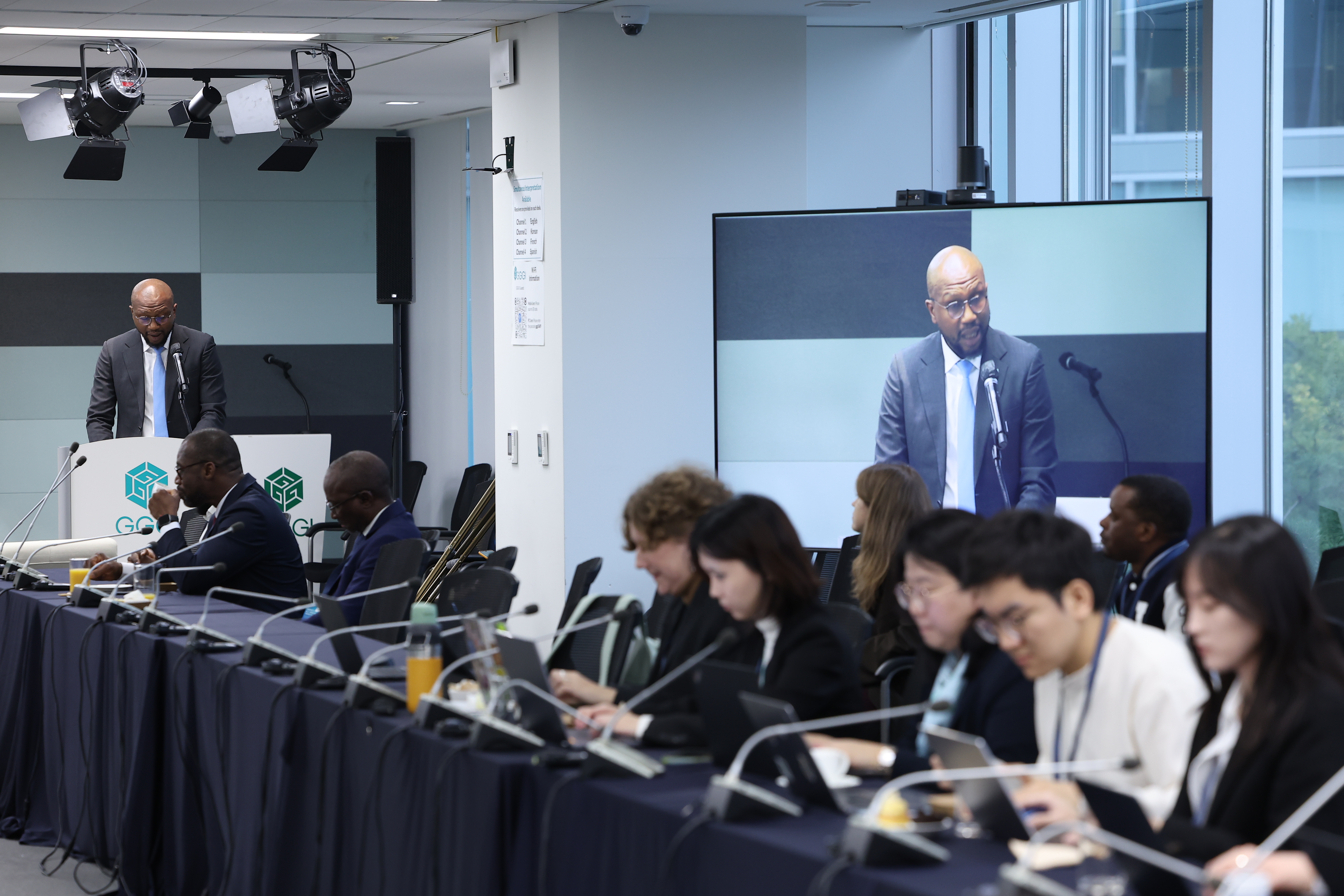
The relevance of CFUs was underscored by Dr. Mallé Fofana, GGGI’s Regional Director for Asia and Officer-in-Charge of the Deputy Director-General for Green Growth Implementation, who situated the discussion within global finance trends. He noted that global climate finance flows reached USD 1.3 trillion annually for the first time—an achievement, yet still far from the USD 8–9 trillion needed each year by 2030. Moreover, private-sector engagement remains uneven: in advanced economies, private finance forms the majority of flows, while in Africa, it accounts for less than 15 percent.
GGGWeek 2025
Fofana highlighted an additional constraint: in many countries, demand for climate finance outpaces the availability of bankable, ESG-aligned projects. Many proposals remain at concept stage, lacking feasibility studies, safeguards, or alignment with national taxonomies. This is where CFUs become critical. They connect national strategies with investment planning, enabling governments to coordinate across ministries, translate climate priorities into structured roadmaps, and prepare pipelines capable of attracting both concessional and commercial capital.
He pointed to early adopters: Uganda’s CFU established in 2023; Kenya’s climate finance and green economy unit supporting green bond issuance; Benin’s emerging CFU linked to its national carbon authority; and Fiji’s integration of climate budget tagging into public financial management. Across these examples, CFUs serve as institutional “connective tissue”—bridging fiscal policy, sector strategies, investment pipelines, and market instruments.
Uganda: Building a System, Not a Project
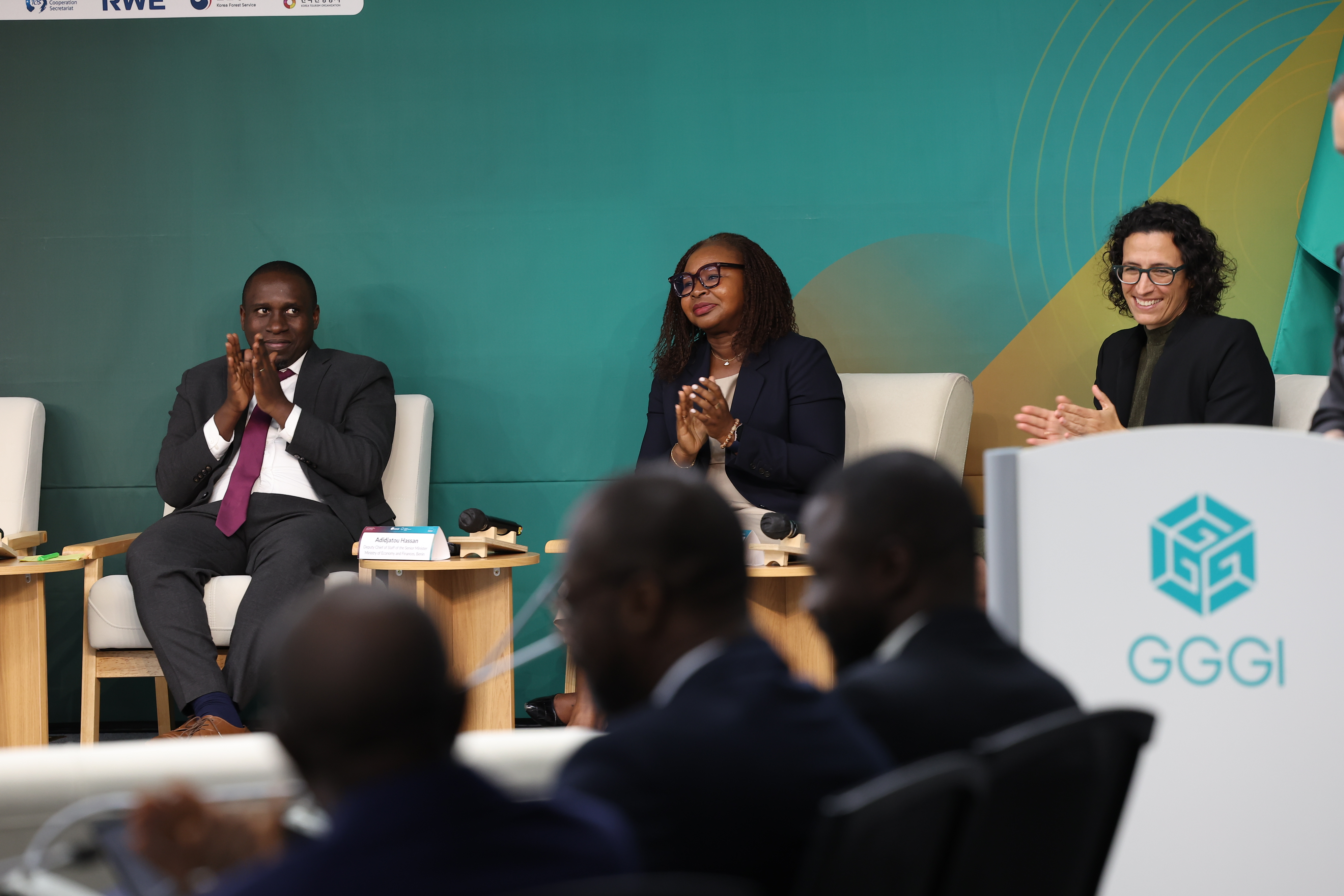
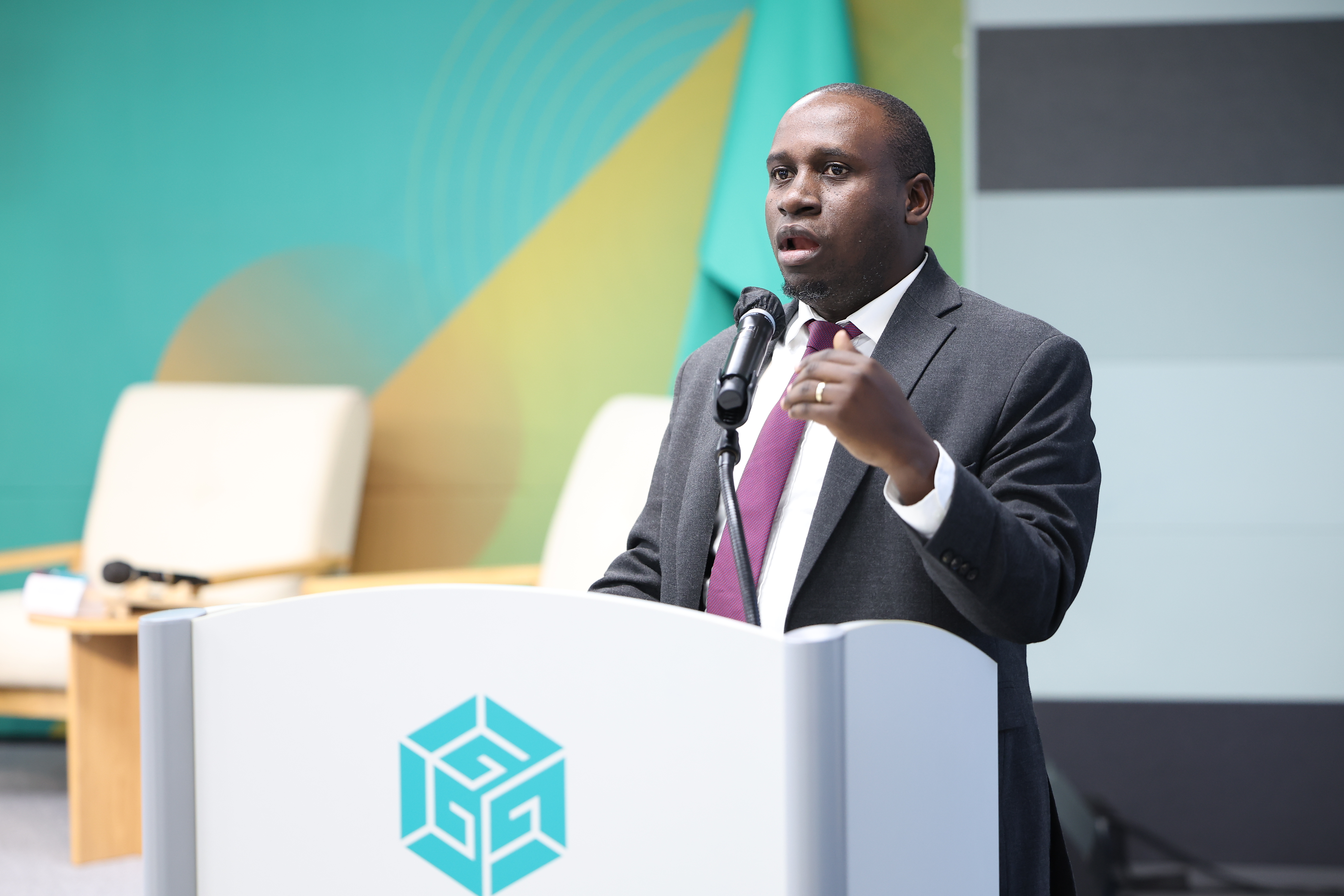
A detailed country case followed, presented by Denis Mugagga, Head of the Climate Finance Unit at Uganda’s Ministry of Finance, Planning and Economic Development. He emphasized that Uganda sees climate change as a macroeconomic stability issue rather than an environmental problem. Simulations conducted with the World Bank show that without adaptation measures, Uganda could lose up to 70 percent of potential GDP growth by 2040—illustrating how climate shocks cascade through financial systems, supply chains, and fiscal policy.
GGGWeek 2025
Mugagga explained that Uganda’s CFU was designed as a national system, not a project. It stems from Uganda’s mandate for resource mobilization and addresses three priorities: mobilizing domestic and international finance; ensuring efficient allocation and compliance with financial conditions; and serving as the national coordination arm across ministries. Uganda’s CFU also functions as the National Designated Authority (NDA) for the Green Climate Fund, the Adaptation Fund focal point, and the institutional lead for carbon markets guidance, budget-tagging, and climate finance reporting.
In two and a half years, the CFU has established a national climate finance strategy, a green taxonomy, guidelines for mainstreaming climate considerations in the financial sector, a national fund, and fiscal guidance for carbon markets. Uganda’s CFU also coordinates the East Africa Climate Finance Directors Forum, a regional peer-learning platform that meets every six months to set shared targets and track progress—an example of institutional cooperation grounded in practice, not politics.
A lesson Mugagga underscored was the need to view CFUs as long-term institutional reforms that evolve through iteration: “You build a system, not a project,” he reflected.
Benin: Reinforcing and Scaling Existing Structures
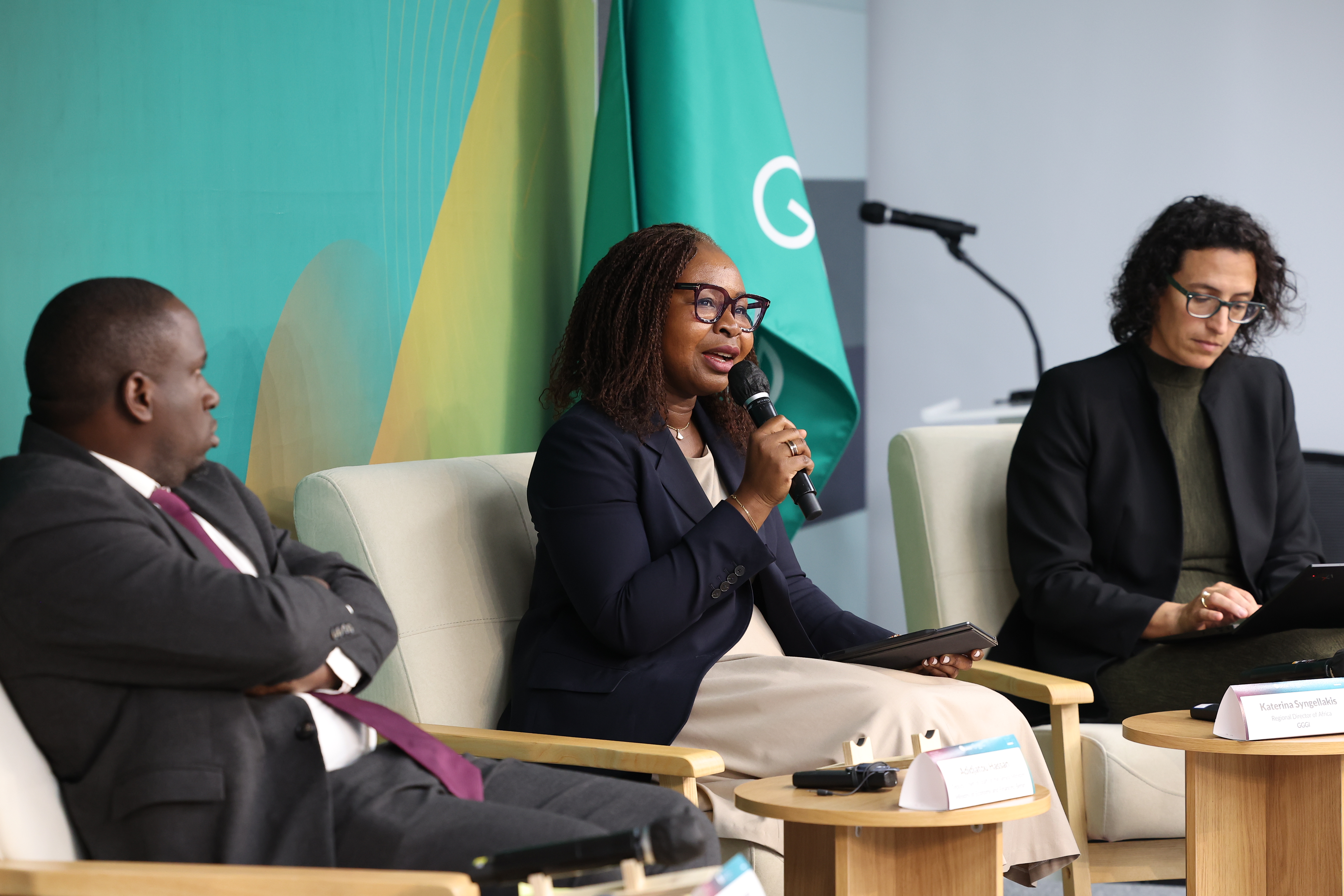
Benin’s perspective was shared by Adidjatou Hassan, Deputy Chief of Staff to the Senior Minister of Economy and Finance and President of Benin’s National Carbon Projects Registration Authority. She emphasized that institutional strengthening must build on what already exists. Benin already operates a national carbon registration authority jointly supervised by the Ministries of Finance and Environment. The CFU is therefore being established not to duplicate, but to reinforce that system, capitalize on established governance arrangements, and expand technical and financial capabilities.
GGGWeek 2025
Benin’s immediate CFU priorities include operationalizing the national green taxonomy and scaling existing climate projects that have proven viable at pilot level but require structured investment approaches to expand. In the longer term, Benin envisions the CFU as a flexible mechanism capable of coordinating national budgeting, aligning development plans with climate priorities, enabling access to carbon markets, and supporting the development of project preparation facilities.
Hassan stressed three foundational principles: governance, coordination, and alignment with national development priorities. Without these, she noted, CFUs risk becoming parallel structures rather than integrated engines of institutional capability.
Papua New Guinea: Anchoring CFUs in Legal Mandates
Vili Caniogo, Senior Technical Officer with GGGI in Papua New Guinea (PNG), shared PNG’s experience establishing a CFU within its Climate Change and Development Authority. The CFU was launched in 2023 with readiness support and is anchored in the Climate Change Management Act, which also establishes a national climate change board and an interagency finance steering committee. The CFU plays a secretariat role within this governance ecosystem, ensuring that data, policy decisions, and financial flows are aligned from technical level to Cabinet.
Caniogo highlighted three factors enabling CFU establishment: strong leadership within the NDA, legislative clarity, and technical support from readiness programmes. He also identified two persistent challenges: recruiting and retaining staff and managing the breadth of expectations placed on CFUs. He noted that PNG approached CFU establishment as part of a suite of reforms—including capacity building, national finance strategy development, and institutional strengthening—rather than as a standalone initiative.
Global Insights: The Knowledge Architecture Surrounding CFUs
From the global perspective, Eszter Mogyorosy, Climate Finance Associate with the NDC Partnership, shared that there is growing momentum and interest surrounding CFUs. Across regions, countries are seeking structured, nationally-led mechanisms to manage climate finance more effectively. Yet many CFUs begin with very small teams tasked with responsibilities that require diverse expertise, from leadership to project development and monitoring. This makes collaboration essential, not only across ministries but also with universities and development partners, which also helps build the steady pipeline of expertise needed to reduce reliance on external support over time.

GGGWeek 2025
Mogyorosy emphasized that CFUs may perform a range of functions tailored to their national contexts; there is no one-size-fits-all model. Their effectiveness and sustainability depend on political support, clarity of mandate, authority to convene, and the capacity to translate national priorities into investments. She also noted that while international public finance remains important, CFUs ultimately play a longer-term role in helping governments create the enabling conditions, such as taxonomies, regulatory clarity, or financial innovation, that attracts private capital.
Reflections from the Discussion: Governance, Coordination, and Permanence
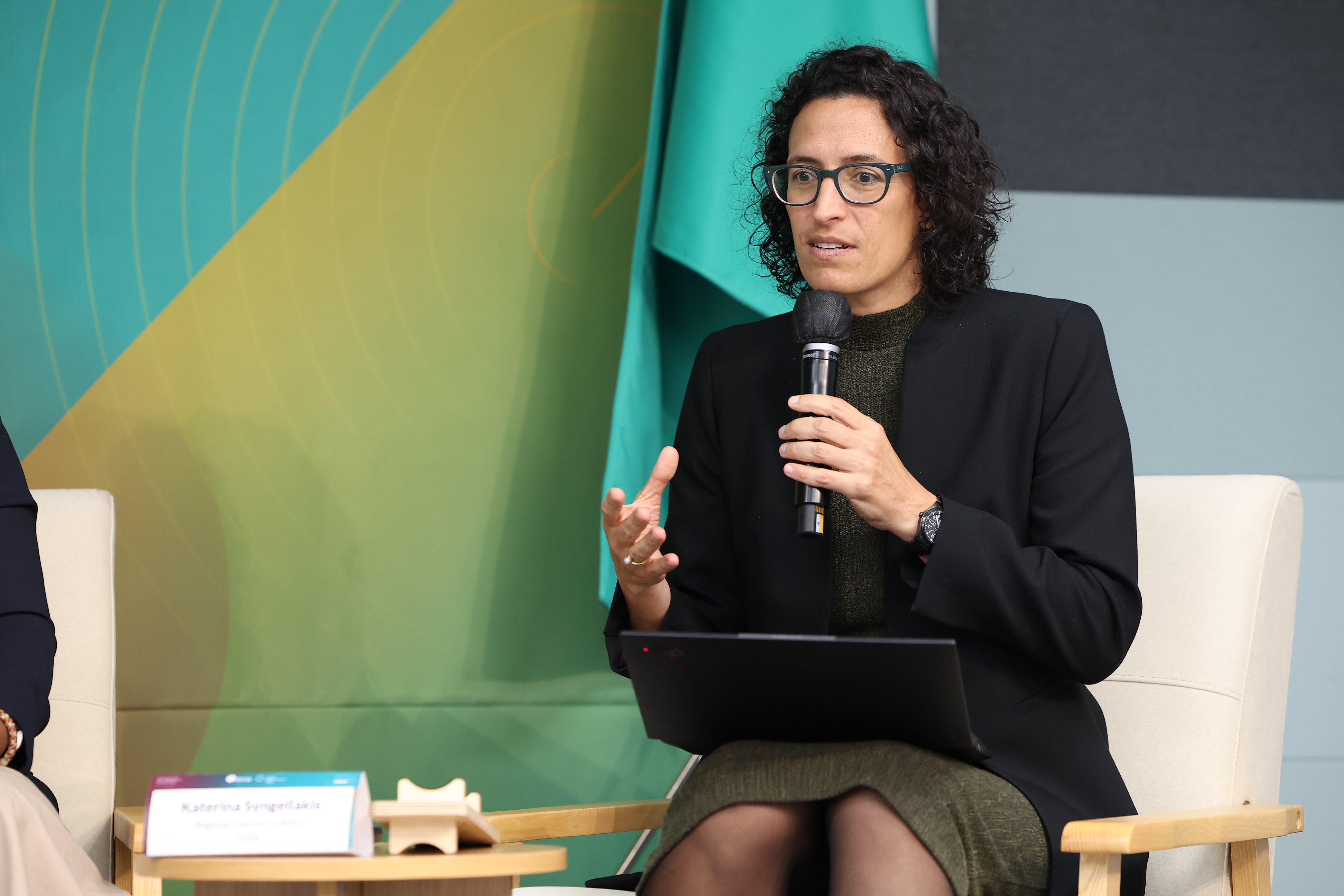
In the open discussion moderated by Katerina Syngellakis, GGGI Regional Director for Africa, panelists reflected on both opportunities and practical challenges. Benin emphasized coordination and alignment with priorities; PNG stressed legal grounding and complementary reforms; Uganda highlighted the importance of treating CFUs as systems that evolve; and the NDC Partnership underscored the diversity of institutional models across countries.
GGGWeek 2025
The panel converged on a core insight: there is no single universal model. CFUs must be tailored to national contexts, institutional histories, and political economies. What matters most is that they provide authority, clarity, and continuity.
The closing remarks delivered by Pablo Martinez, GGGI’s Head of Climate Finance, reinforced this point. He emphasized that while global financing commitments are increasing, implementation depends on national systems capable of integrating planning, budgeting, and financial market engagement. CFUs, he noted, represent an evolution in how countries organize for climate finance—moving from fragmented, project-based approaches toward strategic, coordinated investment planning.
Closing Reflections
Across all contributions, the session highlighted a consistent message: countries are not short on climate strategies; they are short on institutional mechanisms that can turn those strategies into investment-ready portfolios. Climate Finance Units are emerging as one of the most promising tools to fill this gap—providing coherence, governance, and coordination; building pipelines; aligning finance with planning; and strengthening long-term state capability.
The session affirmed that climate finance is no longer the domain of isolated projects or individual ministries. It is a systemic undertaking that requires government-wide coordination, clear mandates, durable institutions, and the ability to translate climate ambition into steady, bankable investment flows. CFUs offer a pathway for countries to institutionalize these functions and mobilize climate finance at the scale and speed required.
Photos @2025 Global Green Growth Institute
Watch the session recording: