

NIP Dialogue Series – Voices from the Countries
North Macedonia – November 2025
The blog is written following an interview with Mr. Aleksandar Mickovski, National Project Coordinator in the POPs Unit in the Ministry of Environment and Physical Planning, North Macedonia and Slavjanka Pejchinovska-Andonova, National expert on new industrial POPs with EcoMosaic, North Macedonia as part of a Series of NIP Dialogues under the Global NIP Update project (GEF ID 10785), funded by the Global Environment Facility (GEF) and led by the United Nations Environment Programme (UNEP).
When North Macedonia ratified the Stockholm Convention 21 years ago, it joined the global effort to protect human health and the environment from persistent organic pollutants (POPs)—an endeavor that required strengthening national systems for POPs management, expanding data coverage, and developing new technical and institutional capacities to address emerging pollutants. Two decades later, the country remains a regional reference point in polychlorinated biphenyls (PCBs) management and is finalizing an update to its National Implementation Plan (NIP) under Article 7 of the Stockholm Convention. This progress reflects not only technical expertise but also the sustained commitment of professionals like Aleksandar Mickovski, National Project Coordinator in the POPs Unit in the Ministry of Environment and Physical Planning, and Slavjanka Pejchinovska-Andonova, national expert on new industrial POPs with EcoMosaic.
The story they shared with Green Growth Knowledge Partnership (GGKP) goes far beyond the number of decontaminated transformers or the vast amount of datasets they analyzed. It is a story of collective, long-term efforts: strengthening methodologies, coordinating institutions, expanding inventories, securing resources, building trust with stakeholders, and preserving the institutional memory needed to ensure each NIP becomes more robust than the one before. It reflects years of technical work, dialogue, and perseverance that have steadily reshaped how the country understands and manages POPs.
Progress in Updating North Macedonia’s NIP
North Macedonia’s POPs journey began with its first NIP in 2005, followed by updates in 2013–2014 and 2018. The current review, launched in autumn 2023 under a GEF-funded and UNEP-led Global NIP Update project (GEF 10785), is the most comprehensive to date and is implemented with strong technical support from the Centre for Research and Environment (RECETOX) at Masaryk University and knowledge support from UNEP Knowledge and Risk Unit (KRU) and GGKP. Eight national experts lead work across POPs pesticides, industrial POPs, unintentional POPs, and cross-cutting themes such as the legal framework, public awareness, and POPs monitoring. Compared to earlier versions, the 2025 NIP advances in three key ways.
First, it expands chemical coverage. While the 2014 NIP focused on polybrominated diphenyl ethers (PBDEs) and per- and polyfluoroalkyl substances (PFAS), the new update adds Decabromodiphenyl ether (DecaBDE), Perfluorooctanoic acid (PFOA), Perfluorohexane sulfonate (PFHxS), Dechlorane Plus, and UV-328, establishing updated or initial baselines for each. Second, it deepens analysis. Instead of limited snapshots, the team examined the period of 11 years (2012–2022), analysing production, imports, exports, in-use stocks, stockpiles, waste streams, and contaminated sites. Material flow analysis (MFA) was central to assembling these data into a clear picture of POPs movements in the country. Third, the update widens sector and product coverage. For electrical and electronic equipment (EEE) and transport, imports were traced back to 2006, and lifespans applied (11, 8, and 5 years for various equipment, and 20 years for vehicles) to estimate stocks still in use. Fourteen additional Harmonized System (HS) codes were analyzed for EEE, and ten more for transport.
For PFAS, the analysis expanded from PFOS alone to the broader group, mapping their presence across firefighting foams, metal plating, paper, textiles, synthetic carpets, paints, and construction materials, using 13 HS codes supported by MFA. It led to a more strategic NIP, providing a clearer understanding of where POPs are found and where risks may emerge next.
Building and Maintaining the National POPs Inventory
A strong NIP depends on a solid POPs inventory. For each POPs group, the Macedonian team began by identifying where the chemicals are used and their properties—flame resistance, water repellence, and durability. They then mapped global producers, historical use periods, and whether the chemicals were domestically produced or imported within finished products. Chemical Abstracts Service (CAS) numbers and HS codes were systematically identified, a methodology refined through previous cycles and vital for PFAS, DecaBDE, PFOA, PFHxS, Dechlorane Plus, and UV-328.
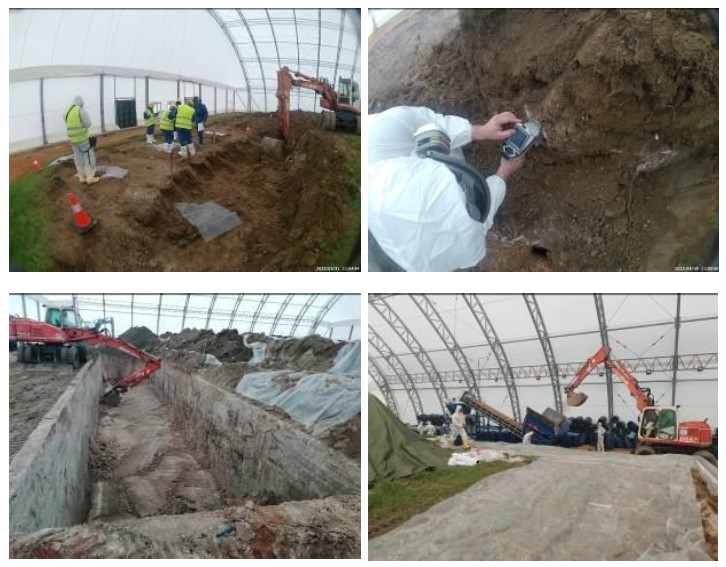
Inventory quality relied on collaboration across more than 200 stakeholders, including line ministries, the Customs Office, Statistical Office and industry. Engagement ranged from inception workshops and thematic working groups to questionnaires and direct consultations. The presence of an active POPs Office, trusted from previous projects, made coordination smoother. Triangulation strengthened data reliability. Customs data revealed imports of PBDE- and PFAS-containing products; the Statistical Office contributed product lifespan information; waste handlers supplied details on Waste Electrical and Electronic Equipment (WEEE), end-of-life vehicles and plastic components; and the Skopje landfill provided insights into construction and demolition waste.
Although some stakeholders provided limited data, the system established a sustainable platform for continuous inventory development across chemicals and sectors in future NIP cycles. While the NIP update covers the full range of POPs, one group has long been central to North Macedonia’s work: PCBs. Widely used in transformers and capacitors, PCBs listed under the Stockholm Convention must be eliminated from use by 2025, with all PCB waste managed in an environmentally sound manner by 2028.
A Regional Model for PCB Management and Regulatory Design
North Macedonia’s PCB programme illustrates what long-term commitment can achieve. With global deadlines approaching to eliminate PCB use by 2025 and ensure environmentally sound management of PCB waste by 2028, the country has identified around 1,100 tons of PCB-contaminated equipment and waste, and has already treated or disposed of approximately 91%.
As Aleksandar Mickovski noted, “To establish sound PCB management practices, you need regulatory, institutional, and technical capacities. Without legal acts covering identification, packing, storage, transportation, and final disposal, there will be no significant progress toward eliminating PCBs.”
Success in PCB management in North Macedonia rests on three key pillars: a solid regulatory framework, dedicated institutional capacities, and robust technical capacities. In addition to the Law on Waste Management, which contains one article on PCBs, a specific Rulebook on PCB Management, adopted in 2007 and updated several times, regulates the entire PCB lifecycle: identification, labelling, record-keeping, data processing, handling, maintenance, phasing-out, storage and packing, transportation, and disposal. It also prescribes deadlines for completing inventories, limiting temporary storage, and ensuring timely disposal.
Institutional arrangements reinforce this framework. A dedicated POPs Unit within the Ministry of Environment and Physical Planning coordinates POPs-related projects, assists stakeholders in meeting regulatory obligations, and maintains the institutional memory needed for sustained implementation. The State Environmental Inspectorate complements this work through field inspections of PCB owners, evaluation of PCB management practices, and enforcement actions. To date, the POPs Unit has mobilized around USD 6.8 million for activities including PCB inventory and disposal, training of technical and administrative personnel, awareness-raising for NGOs and media, disposal of DDT, identification of obsolete pesticides, assessment of POPs-contaminated sites, and remediation of Hexachlorocyclohexane (HCH) hotspots.
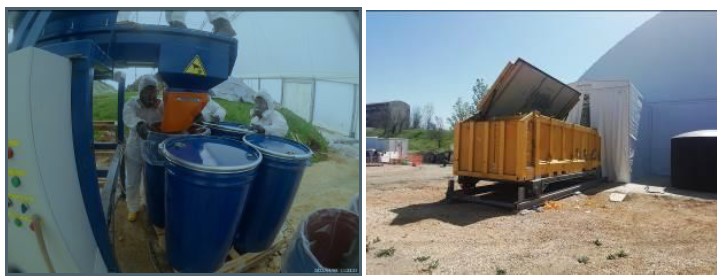
The PCB inventory followed a three-step methodology: (1) sampling of transformers and large equipment, (2) screening using non-specific PCB tests (colorimetric or electrochemical methods), (3) laboratory verification of positive samples.
POPs Unit staff and environmental inspectors supervised the process to ensure accuracy and reliability. A national PCB database, developed in 2005, now enables continuous tracking of quantities, PCB concentrations, and equipment status, supporting prioritization and enforcement.
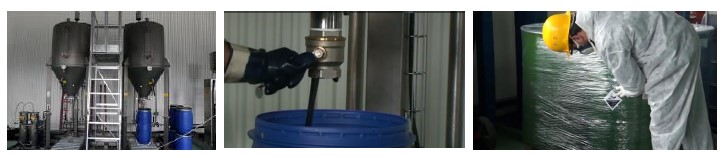
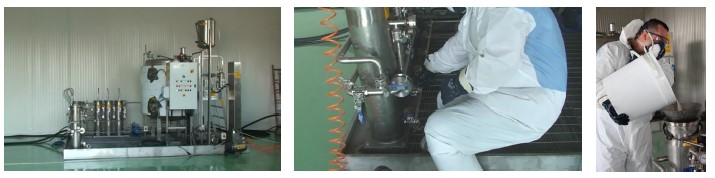
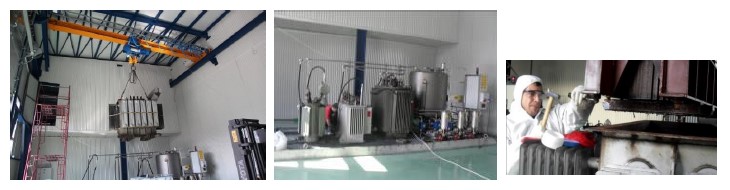
Regulation was paired with technical infrastructure. Through GEF financing and private-sector investment, a state-of-the-art dehalogenation facility was established at Rade Končar Service, equipped with Best Available Techniques/Best Environmental Practices (BAT/BEP)-compliant non-combustion technology that enables domestic decontamination of transformers and oils. This reduced disposal costs, increased national self-reliance, and allowed much of the PCB stream to be treated within the country.
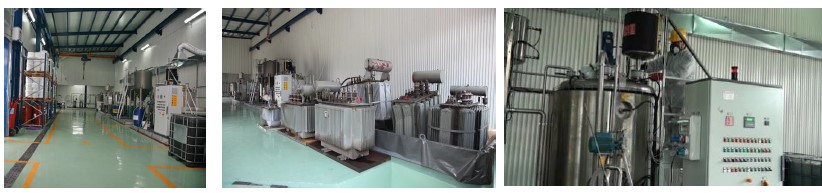
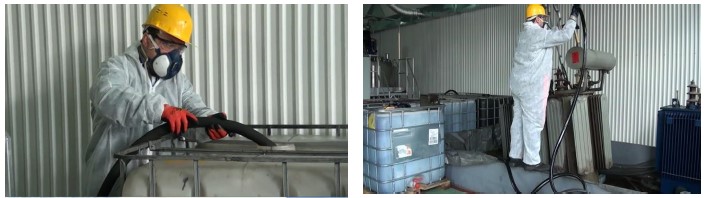
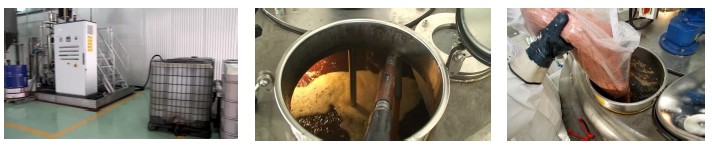
From the 964 tonnes of PCB-contaminated transformers identified, 895 tonnes have been decontaminated, with 41 tonnes remaining, plus 28 tonnes of pure-PCB (Askarel) transformers still requiring disposal. Of the 119 tonnes of capacitors, 89 tonnes have been disposed of, with 30 tonnes remaining. All 16 tonnes of PCB waste oil have been processed domestically using the national treatment technology. Remaining challenges include PCB equipment stored in bankrupt industrial facilities, where ownership and financial responsibility are unclear. Nonetheless, North Macedonia has already established the regulatory, institutional and technical foundations needed to complete the phase-out—offering a strong regional model for others aiming to close the PCB cycle.
Awareness-Raising and Stakeholder Engagement
Technical systems only function when people understand and support them. For Mr. Mickovski, awareness-raising has been central to making PCB management credible and effective. At the outset, knowledge about PCBs was low across institutions, industry, and the public. Over time, the POPs Unit carried out a sustained outreach effort: campaigns on environmental and health risks; trainings for policymakers, customs officials, inspectors, and company managers; and capacity-building for workers directly exposed to PCBs. Media and NGOs played a key role in reaching the general public, especially because the PCB treatment facility is located in a residential area. Training journalists and NGO representatives ensured accurate, responsible communication and mitigated public concerns. Outreach was supported by printed materials, digital resources, and a dedicated POPs website providing gender-sensitive information on PCB risks and policies.
Inspection capacity was strengthened through specialized training and checklists covering storage conditions, emergency preparedness, equipment condition, and company record-keeping. Transformer maintenance personnel were trained to avoid cross-contamination—critical in a context where around 97% of PCB-contaminated transformers resulted not from intentional production, but from topping up with oils of unknown origin.
Lessons Learned and Next Steps for the Region
Building on these insights, Ms. Pejchinovska-Andonova underscores several lessons that can benefit other countries undertaking similar NIP processes. A transparent and inclusive approach requires time—typically two to three years—to allow stakeholders to contribute data, validate inventories, and jointly shape national priorities. Clear communication on why the data are needed is essential. Expert teams must first be aligned internally. Before distributing questionnaires, experts must agree on the purpose of each item and ensure it fits the inventory logic and material flow analysis. Providing stakeholders with lists of POPs, CAS numbers, and example products greatly improves accuracy.
“The development of a NIP with a transparent, inclusive approach requires time—at least two or three years. Stakeholders have their own tasks; you are not a priority for them. Be patient, be clear about what you ask for, and explain why you need the data. This is crucial for good progress,” noted Ms. Pejchinovska-Andonova.
Flexible data-collection methods help reach different stakeholders, and peer-to-peer cooperation—in Macedonia`s context, regular exchanges with Montenegro—accelerates methodological alignment. Strong team dynamics matter. Regular coordination ensures consistency across POPs groups and supports shared problem-solving. Prioritization must also be participatory: North Macedonia moved from 72 proposed actions to 15 priority objectives through structured stakeholder sessions, after which stakeholders co-designed the action plans.
Looking ahead, the country will focus on managing remaining PCB equipment in bankrupt industries, securing financing for final disposal, and expanding PFAS inventories into additional sectors. For the region, North Macedonia offers a practical roadmap: develop a clear regulatory framework and dedicated POPs unit; secure finance to invest in solid inventories and data systems; secure finance for the establishment of treatment capacity where feasible; and sustain long-term stakeholder engagement. The details may differ from country to country, but the core lesson holds: sound POPs management is a long-term commitment—built step by step through institutions, relationships, and trust.
To learn more about the Global NIP Update project, visit Global NIP Update | Green Policy Platform