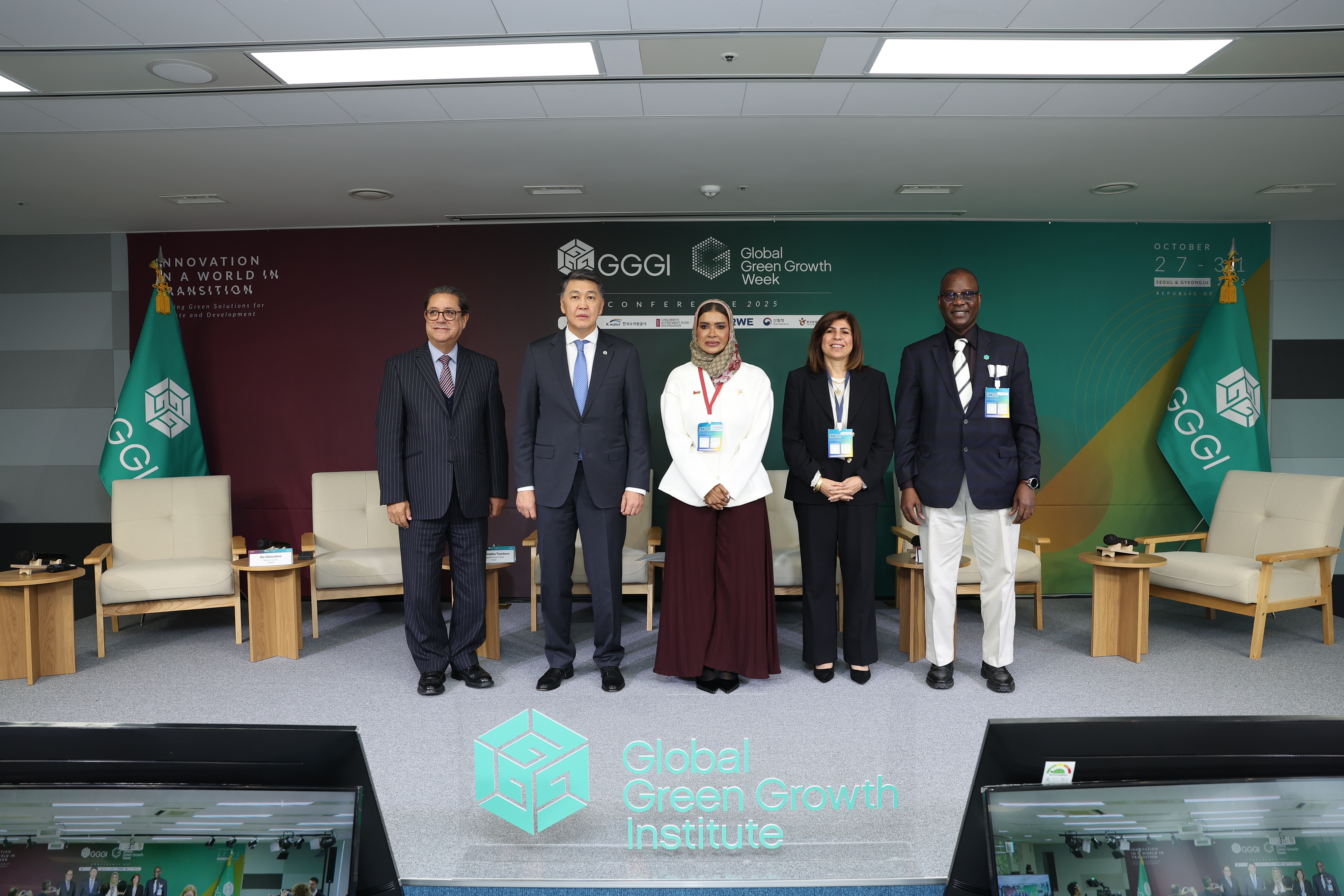


Inspired by the session “Green growth as a response to desertification: economic and financing strategies in arid contexts” at GGGWeek 2025
From Environmental Threat to Systemic Risk
What was once seen as a gradual environmental shift has become a structural challenge to food security, water resources, and rural livelihoods.
Droughts last longer; floods arrive faster, and fertile soils are thinning. Communities that once lived with predictability now face rising uncertainty. Across many GGGI Member and Partner States, climate- and sustainability-related pressures are driving internal displacement, intensifying competition for scarce water and arable land, and raising the risk of social tension.
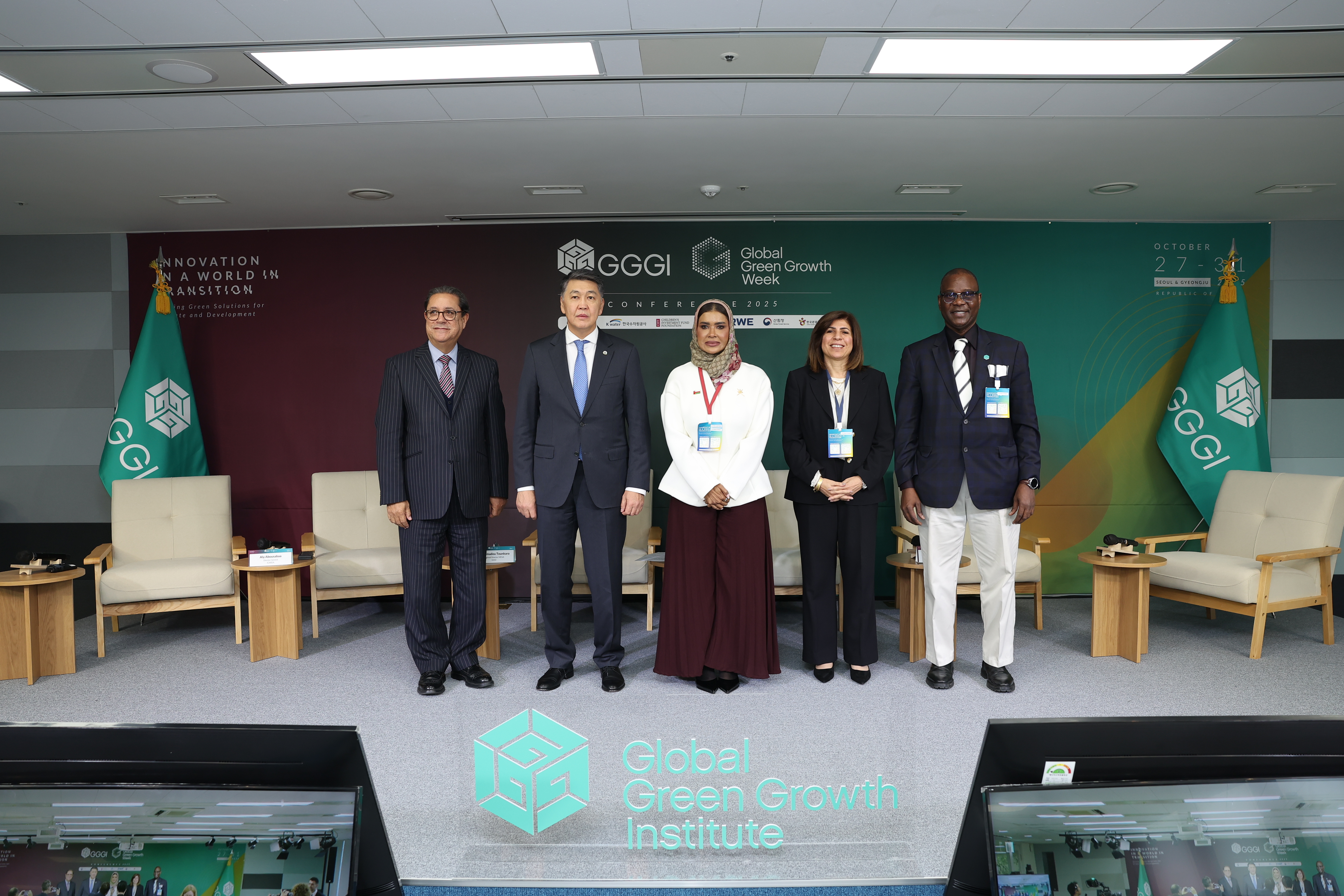
It was against this backdrop that GGGWeek 2025 convened a session on desertification, land restoration, and nature-based solutions in arid regions. The dialogue brought together institutional leaders, regional organizations and technical experts to explore what it takes to move from commitment to implementation — and how to design restoration efforts that support livelihoods, strengthen economies and rebuild landscapes in ways that communities can trust and sustain.
Opening the session through a video message, GGGI President and Chair H.E. Ban Ki-moon underscored the urgency of this work, warning that rising temperatures, land degradation and extreme weather could lead to “more desertification… billions more climate refugees… and billions more facing hunger and malnutrition” unless collective action accelerates. His remarks reinforced the shared premise of the session: that land restoration is no longer a peripheral environmental matter, but a central pillar of development planning, climate resilience and long-term stability.
Land Restoration as Economic Infrastructure
A shared framing emerged across the interventions: the “economy of land restoration and bioeconomy opportunities.” Land restoration endures when it is treated as an economic infrastructure rather than a secondary environmental activity. Soil is a productive capital. Water security for both productive and domestic uses is a competitive factor. Nature-based solutions are not “soft” measures, but foundational systems that support rural incomes and stabilize national food supply.
In this framing, adaptation is not only about protection from climate impacts. It is also about rural employment, enterprise development, and the basis for future growth. Policy coherence, data systems and investment alignment are not merely enabling conditions, but part of the operational core of large-scale restoration.
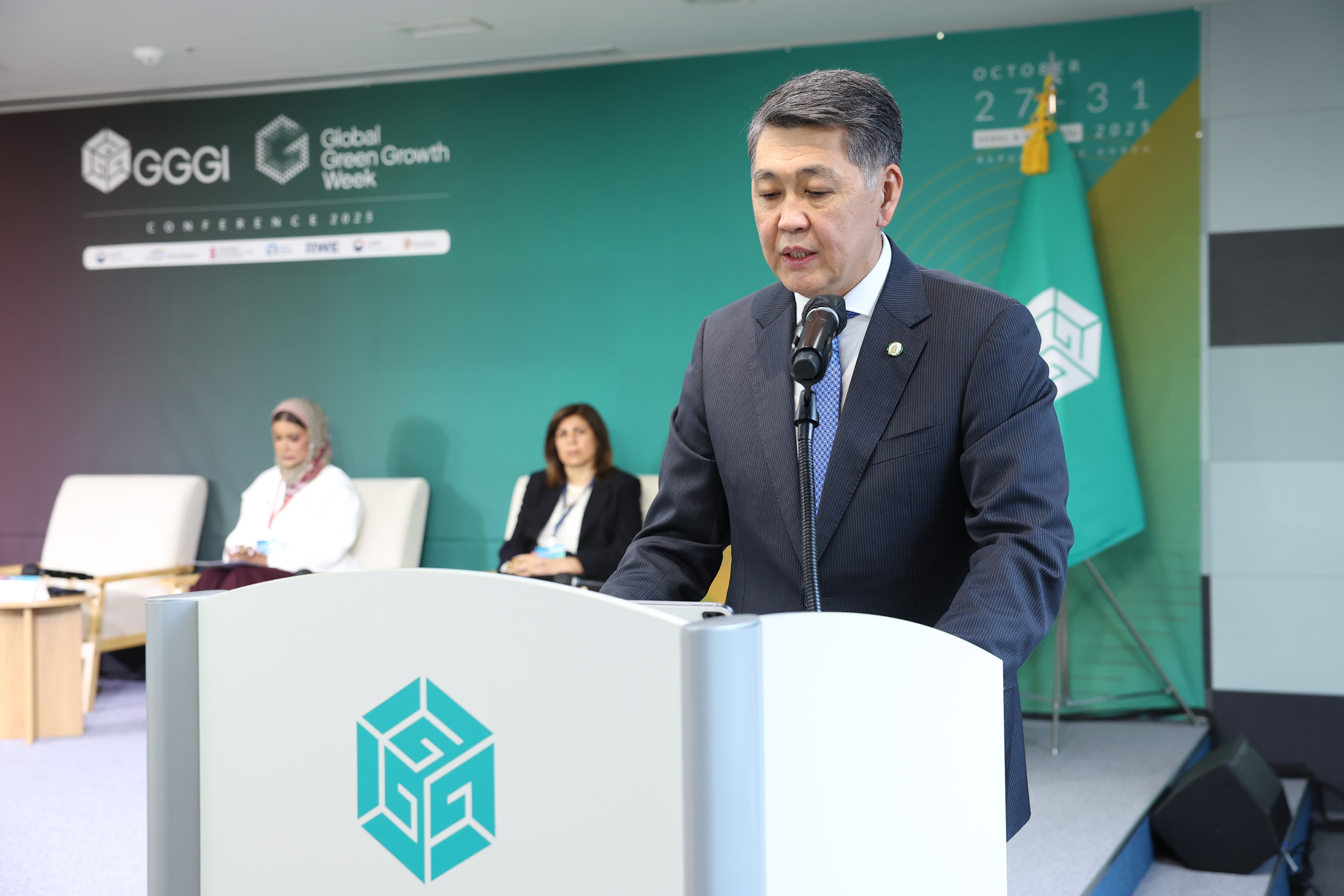
H.E. Berik Aryn, Director General of the Islamic Organization for Food Security (IOFS), captured this idea succinctly, referring to the “economy of land restoration” and “land restoration as a business,” where “every drop of water that is smartly used, every gram of carbon stored in the soil, every grain that we produce” is part of a resilient growth model grounded in partnership.
GGGWeek 2025
Soil Security, Circular Value and Farmer Agency
H.E. Aryn anchored the discussion in the principle that food security begins with soil security. IOFS, a specialized institution of the Organization of Islamic Cooperation, works across 57 member states where land degradation, water scarcity and food insecurity are often intertwined. He recalled that 11 member states face drastic food insecurity, highlighting that desertification is not only an environmental issue, but also an economic, social and security concern.
The keynote illustrates how IOFS supports climate-smart and circular approaches on the ground. In Nigeria, farmers and experts are being trained to convert agricultural residues into organic mineral fertilizers, reducing dependence on imported inputs, enriching soil organic matter and generating employment in green agro-industries. In Benin, farmers are applying advanced composting techniques, producing effective microorganisms for biofertilizers and generating biogas from waste—turning residues into economic value while improving soil fertility and supporting a circular bioeconomy in agriculture.
In Central Asia, IOFS has launched a project on biotechnology for sustainable farming, focusing on biochar. A prototype biochar machinery has been handed over to a national agrarian research university, illustrating how technology transfer and local research capacity can move together to improve productivity and carbon capture in dry areas.
At the country level, new initiatives are being designed to integrate policy and practice. In Iraq, IOFS is preparing a national climate-smart agriculture programme aligned with the country’s National Adaptation Plan and UNCCD commitments. The programme aims to modernize irrigation through digital water accounting and soil-moisture sensors, establish a national platform for soil and plant health, and mobilize blended finance to sustain results over time. In all of these efforts, farmers are positioned not only as beneficiaries but as stewards of natural resources and agents of change.
Recent regional activities underline this approach. IOFS has co-organized training on water governance and digitalization with the Islamic Development Bank in Astana and hosted a webinar series on water security with Hamad Bin Khalifa University—recognizing that soil and water security must be addressed together.
Looking ahead, H.E. Aryn underlined the potential of the emerging partnership between IOFS and GGGI, with a memorandum of understanding to be signed during GGGWeek, as a vehicle to scale these models across OIC member states in line with the UNCCD and SDG 15. “Each hectare of restored land,” he noted, “each farmer trained in climate-smart agriculture, each water-efficient irrigation system installed” represents an investment in resilience, employment and national stability.
A Bioeconomy-Based Restoration Model from the Sultanate of Oman
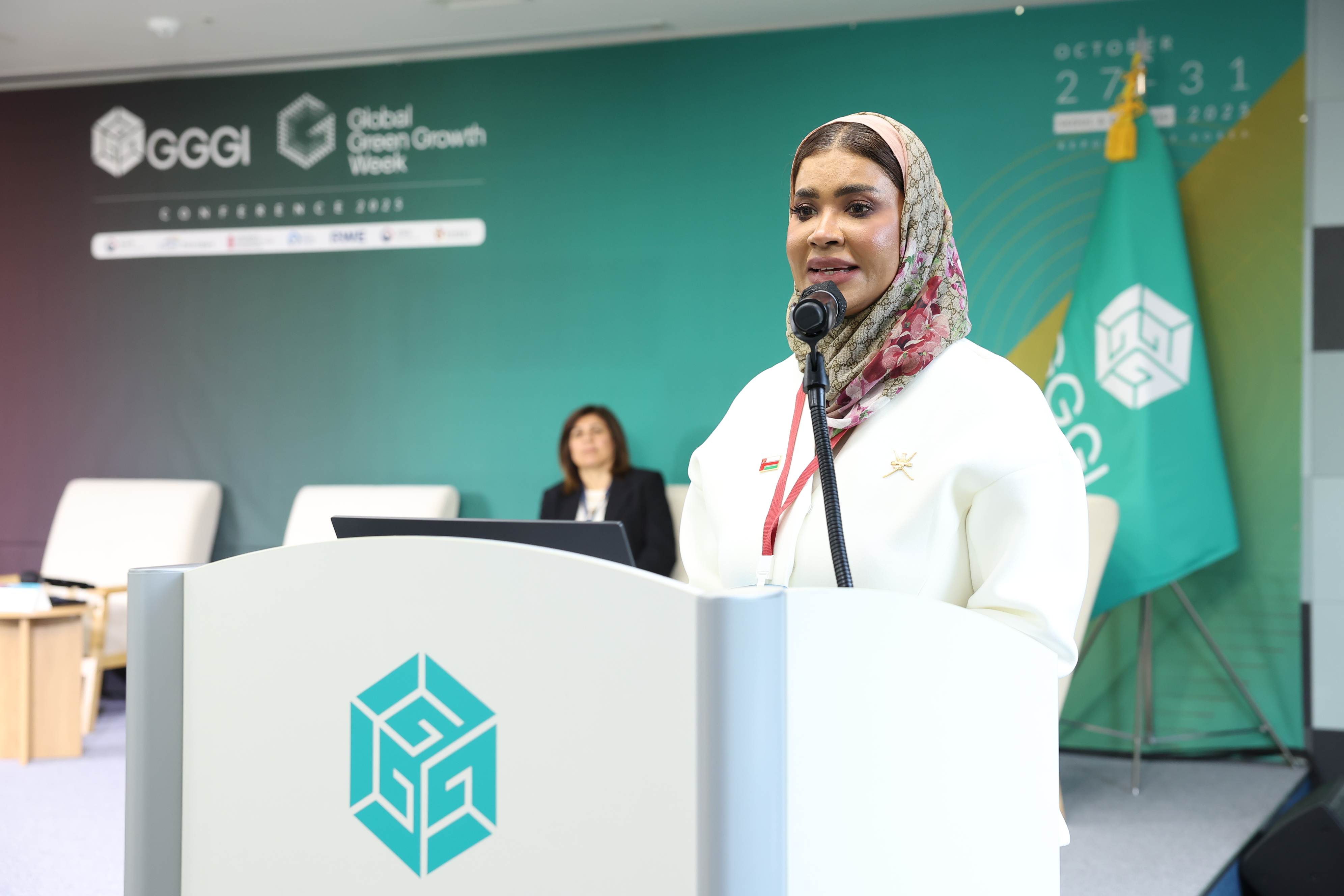
H.E. Dr. Thuraya Said Al-Sareeria, Presidential Advisor for Nature Conservation at the Environment Authority of the Sultanate of Oman, presented the Accelerating Resilience and Innovation for Sustainable Ecosystems Management (ARISE) programme. ARISE is a six-year, USD 100 million initiative co-developed with GGGI to transform Dhofar into a bioeconomy landscape with Special Sustainable Economic Zones (SSEZ).
GGGWeek 2025
Design work began two years ago and is now nearing completion, with implementation expected to start in the coming year. The programme integrates policy solutions, green infrastructure, behaviour change and investment mobilization, aligned with Oman Vision 2040, the 10th Five-Year Development Plan and the country’s carbon neutrality commitment for 2050. Restoration and protection measures will span thousands of hectares, including the restoration and protection of around 3,000 hectares of critical ecosystems and the sustainable management of about 45,000 hectares of natural lands. The programme is structured around three integrated pillars—nature-based solutions, bioeconomy and sustainability—and is projected to reduce emissions by an estimated 750,000 tonnes of CO₂ equivalent while positioning Dhofar as a region where “3,000-year-old tradition marries cutting-edge bioeconomy innovation.”
The programme places particular emphasis on supporting livestock owners, youth enterprises and women-led agricultural businesses, and on strengthening value chains for milk, meat, turmeric and fragrances so that ecological recovery translates into stable livelihoods. Over its duration, ARISE aims to train around 1,100 livestock owners in nature-based solutions, support at least 1,000 bioeconomy-oriented small businesses and provide skills development for more than 500 people, with over half of the benefits expected to reach youth and women “greenpreneurs”. On the economic side, it is designed to mobilize around USD 200 million in investments in nature-based solutions and SSEZs, build a pipeline of roughly USD 500 million in green project ideas in Dhofar, and generate about 1,000 green jobs.
Dr. Al-Sareeria underlined that one of the main challenges in programme design was cultural acceptance. Pastoral communities in Dhofar have deep identity ties to traditional livestock mobility patterns, particularly camel herding. Initial resistance to changes in land use and management was addressed by shifting from a consultation model to a co-leadership model. “We designed it in a way that local farmers lead the program—not just participate in it,” she explained. This approach drew on extensive workshops with local communities, small and medium enterprises and companies in the meat and dairy value chains, and is expected to remain central throughout implementation from 2024 to 2030.
Efficiency Under Scarcity: Innovation for Drylands
H.E. Aly Abousabaa, Director General of the International Center for Agricultural Research in the Dry Areas (ICARDA), highlighted how innovation in drylands is shaped by scarcity. ICARDA works across non-tropical drylands in North Africa, the Middle East and South and West Asia—regions facing acute water scarcity, land degradation and projected temperature increase of up to six degrees Celsius in some countries by the end of the century.
Within this context, ICARDA develops innovations that enable countries to “produce more with less.” Working with partners including MIT, the organisation has developed ultra-low-pressure emitters for irrigation that can reduce energy use by about 80%. New cereal varieties offer viable yields under heat and drought stress on poor soils with limited water, allowing countries that have not traditionally produced certain cereals to achieve economically viable production under constrained conditions.
ICARDA is also screening around 35,000 forage accessions from its gene banks, with support from partners such as the Bezos Foundation, to identify low-methane livestock feed. This work reflects a model in which climate mitigation and productivity advance together. Abousabaa stressed that such technologies scale only when accompanied by credible policy evidence. He recalled earlier work in Ethiopia, conducted with GGGI support, to establish emissions baselines across key sectors. The analysis showed that the livestock sector was a major source of emissions and helped identify options—such as improved feed combinations and higher extraction rates in abattoirs—that could reduce emissions while maintaining production. This type of evidence, he noted, enables policymakers to take informed decisions and provides funders such as the World Bank and the European Union with a clear basis for climate-related investments.
Looking ahead, he drew attention to a tightening global funding environment, with expected reductions in some areas of development finance. This, he argued, increases the importance of partnerships and of using digital tools and artificial intelligence to make innovations developed by CGIAR centres more accessible to a wider range of countries and communities.
Water, Energy and Soil: Practical Lessons from the Senegal River Valley
The Senegal River Valley example, presented through a short field film, offered a grounded view of how restoration practices are taking shape at farm level. Farmers featured in the footage described using mulching—hay, grass, leaf litter and crop residues—to retain soil moisture, reduce evaporation and support healthier plant growth, without relying on external inputs. The results shown were practical: longer irrigation intervals, lower production costs and improved household incomes.
The film also highlighted the role of solar-powered irrigation systems under the “solar irrigation for climate-smart agriculture” project, where community-managed systems draw on 448 solar panels to provide more reliable and affordable water. Local leaders emphasized that sustaining this infrastructure depends on building community maintenance capacity, and training efforts are already underway.
Together, the example underscored a core message of the session: restoration delivers lasting benefits when it matches technical solutions with local institutions and economic realities.
Regional Coordination and Intergenerational Continuity
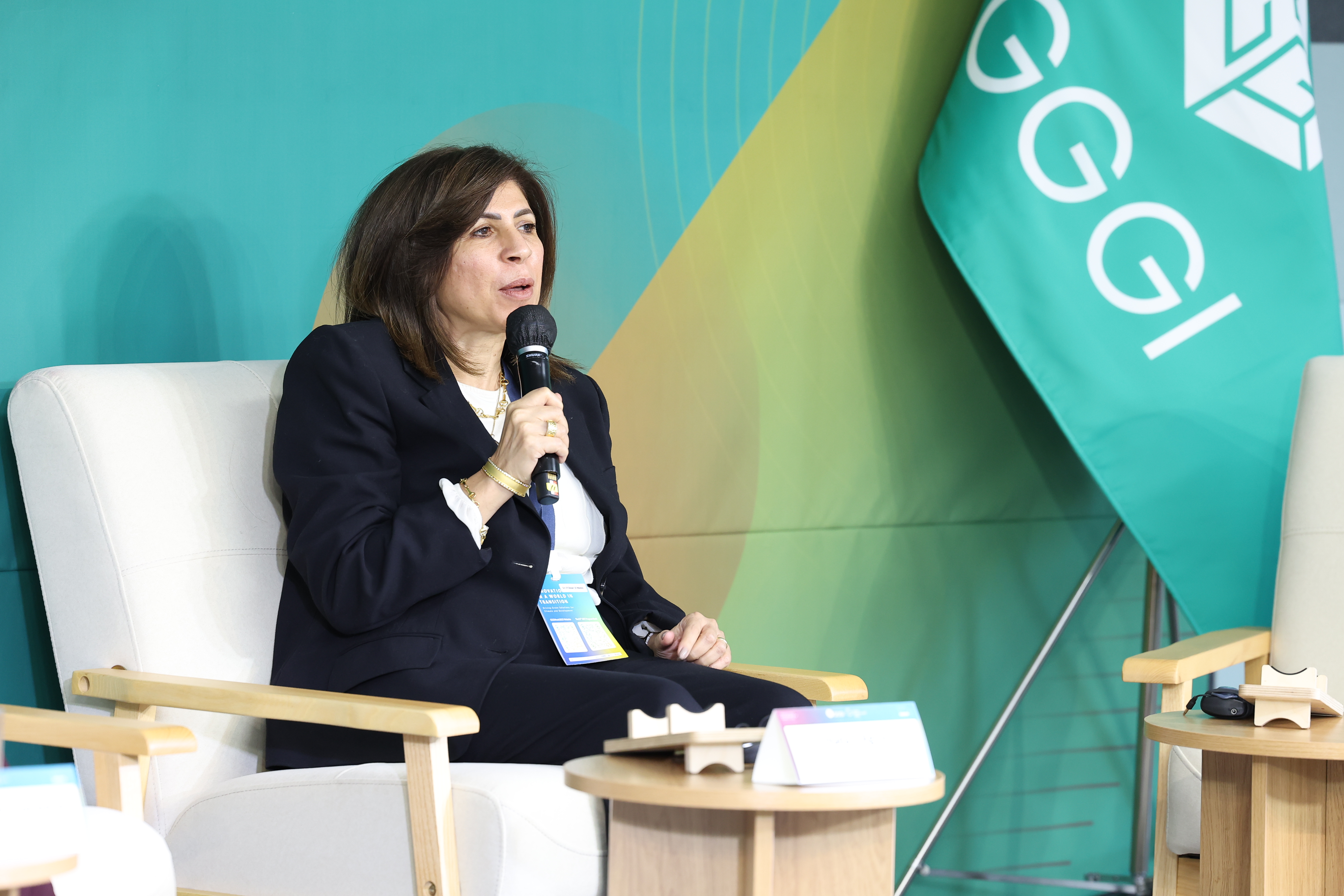
H.E. Nada El Agizy of the League of Arab States underscored that land restoration and climate-resilient development cannot advance at scale without coordinated regional policies. She emphasized that the Arab region’s shared environmental challenges—water scarcity, land degradation, and rising climate impacts—require joint platforms for action and harmonized approaches among countries.
She stressed the role of partnerships with UN agencies, civil society and the private sector to accelerate green growth, noting that collaboration is most effective when it enables countries to exchange practical solutions and co-develop regional initiatives. Her final message centered on youth. With young people forming the majority of the region’s population, she highlighted that “they are the energy, the future, the ones who will lead. We must give them space to create and shape solutions in their own way.” Innovation will come from giving them the conditions and authority to shape the systems they will inherit.
GGGWeek 2025
The Direction of Future Shared Action
By the end of the session, a shared proposition emerged: desertification is not only an environmental challenge, but also a food system, water security, employment, and stability challenge. Restoration that endures treats soil and water as strategic assets, links ecological recovery to market value and job creation, builds community leadership from the outset, and rests on policy evidence that can mobilize investment at scale.
Participants converged on the view that the work ahead requires partnerships that align design, financing and governance—not in parallel, but in integrated implementation. In the context of tightening development finance, this will demand smarter collaboration, greater use of digital tools and AI for knowledge sharing, and stronger regional platforms.
Protecting water resources, restoring land to function, treating soil carbon as a productive asset, and ensuring that improvements in land health translate into better livelihoods were identified as practical building blocks of this agenda. In this configuration, land restoration is not only a response to environmental degradation; it becomes a pathway to resilient and inclusive prosperity in some of the world’s most climate-vulnerable regions.
GGGWeek 2025
Photos @ 2025 Global Green Growth Institute
Watch the session recording: