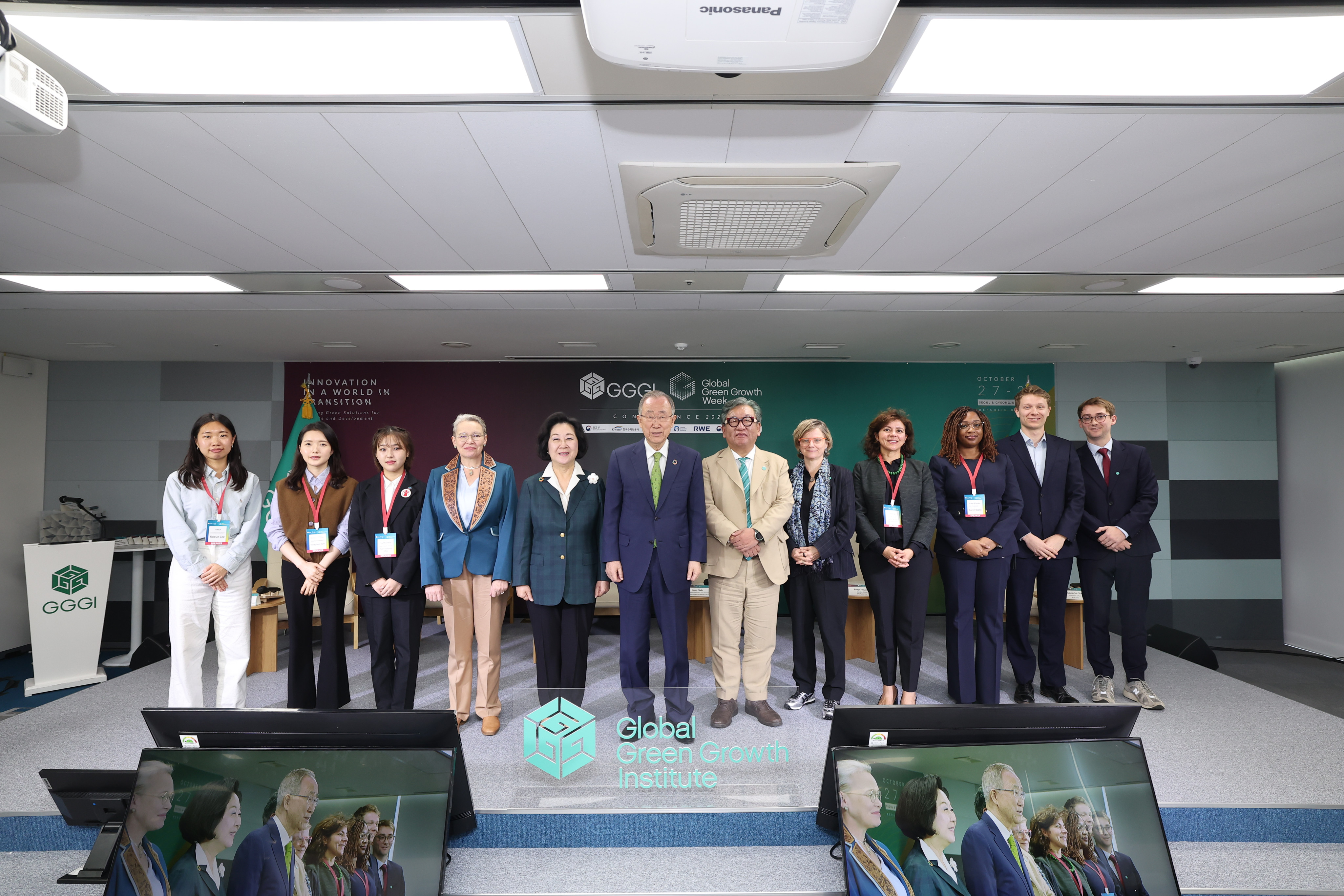


Inspired by the session “Youth Innovation in the Digital Age” at GGGWeek 2025
Seoul, 27 October — GGGI Headquarters, Global Green Growth Week
Youth as Co-Architects of Digital Innovations for Sustainable Futures
The opening session of Global Green Growth Week set the tone for the days ahead: digital transformation is reshaping how societies respond to climate change, but the direction of that transformation depends on who has a seat at the design table. Youth leaders, government representatives and development partners gathered to confront a deeper systemic question: How can young innovators be recognized not only as beneficiaries, but as co-architects of climate solutions?
This broader question paved the way for a closer look at how youth leadership is already taking shape within digital innovation ecosystems. Francesco Dinmore, Gender Equality and Social Inclusion Analyst at the Global Green Growth Institute (GGGI), articulated this shift with clarity. The conversation was not framed as a celebration of youth participation, nor as a symbolic gesture of inclusion. Instead, it examined how youth-led digital innovation, spanning artificial intelligence (AI), data platforms and services, is already advancing climate mitigation and adaptation, and what institutional frameworks are required to sustain and scale this leadership.
By reframing youth engagement as an institutional question, his remarks sharpened the session’s purpose and guided the discussion forward. Delegates were asked to consider how decision-making spaces, financing mechanisms and digital infrastructure must evolve so that young people are able to shape climate and development pathways on equal footing.
Intergenerational Leadership and Ethical Responsibility
GGGI’s Executive Director Sang-Hyup Kim recalled the moment the Paris Agreement was adopted, reminding participants that consequences from climate decisions will be experienced most directly by younger generations. His argument was not about representation, but responsibility. Those who are younger today will carry out the consequences of the choices being made now. Critically, many young people bring native fluency with digital technologies, positioning them as key agents in translating climate ambition into practical solutions. 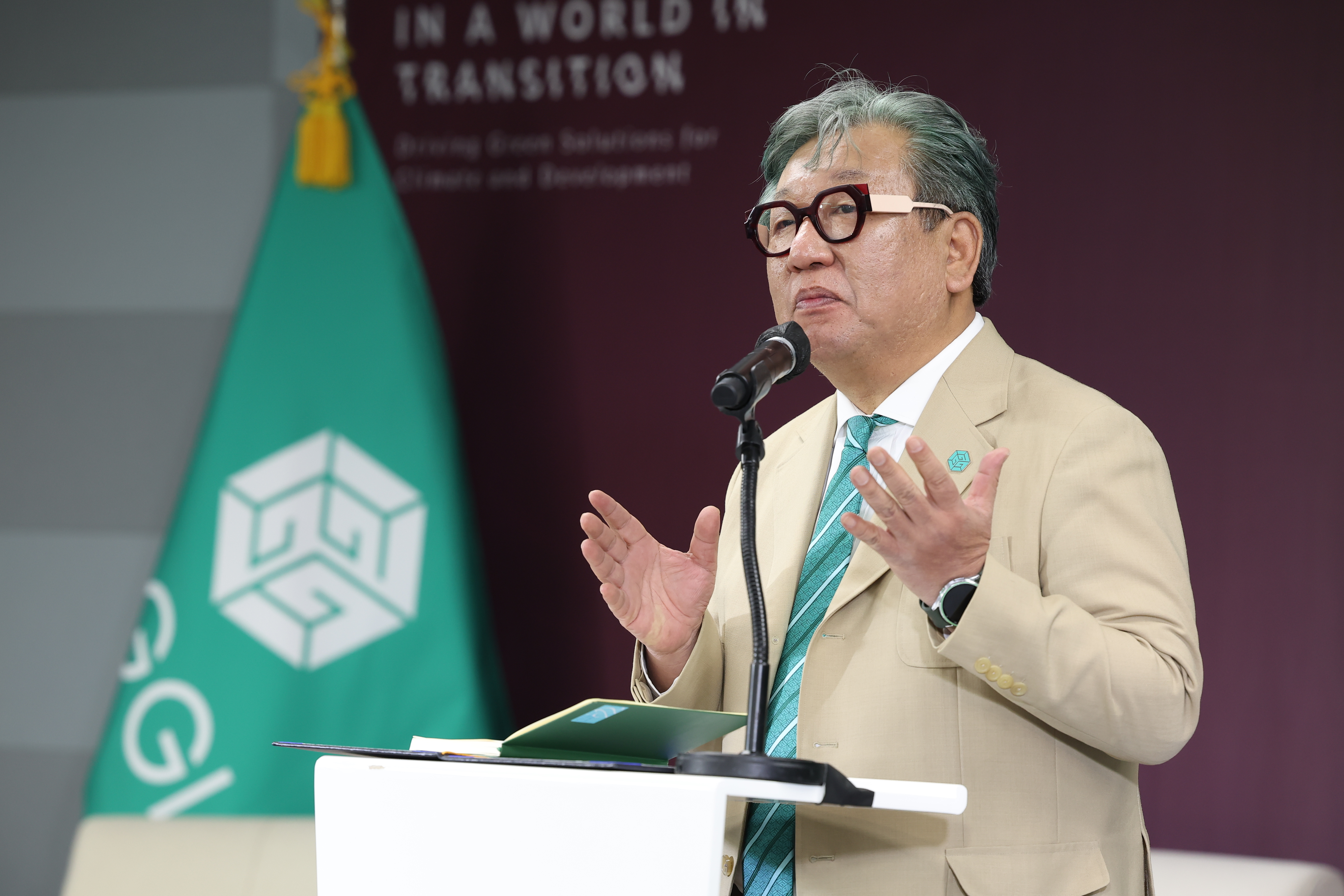 GGGWeek 2025
GGGI’s President and Council Chair Ban Ki-moon shed light on youth responsibility in fostering sustainable and inclusive development. Reflecting on the Paris Agreement, the Sustainable Development Goals (SDGs), and the establishment of UN Women, he emphasized that progress is sustained only when grounded in fairness and inclusiveness. “Young people are not just the leaders of tomorrow; they are the change-makers of today,” he said. His call for passion guided by compassion underscored the human dimension of technological development. “You should never be left behind, you should be part of everything,” he added, ensuring young people are active participants in shaping climate action and innovation. 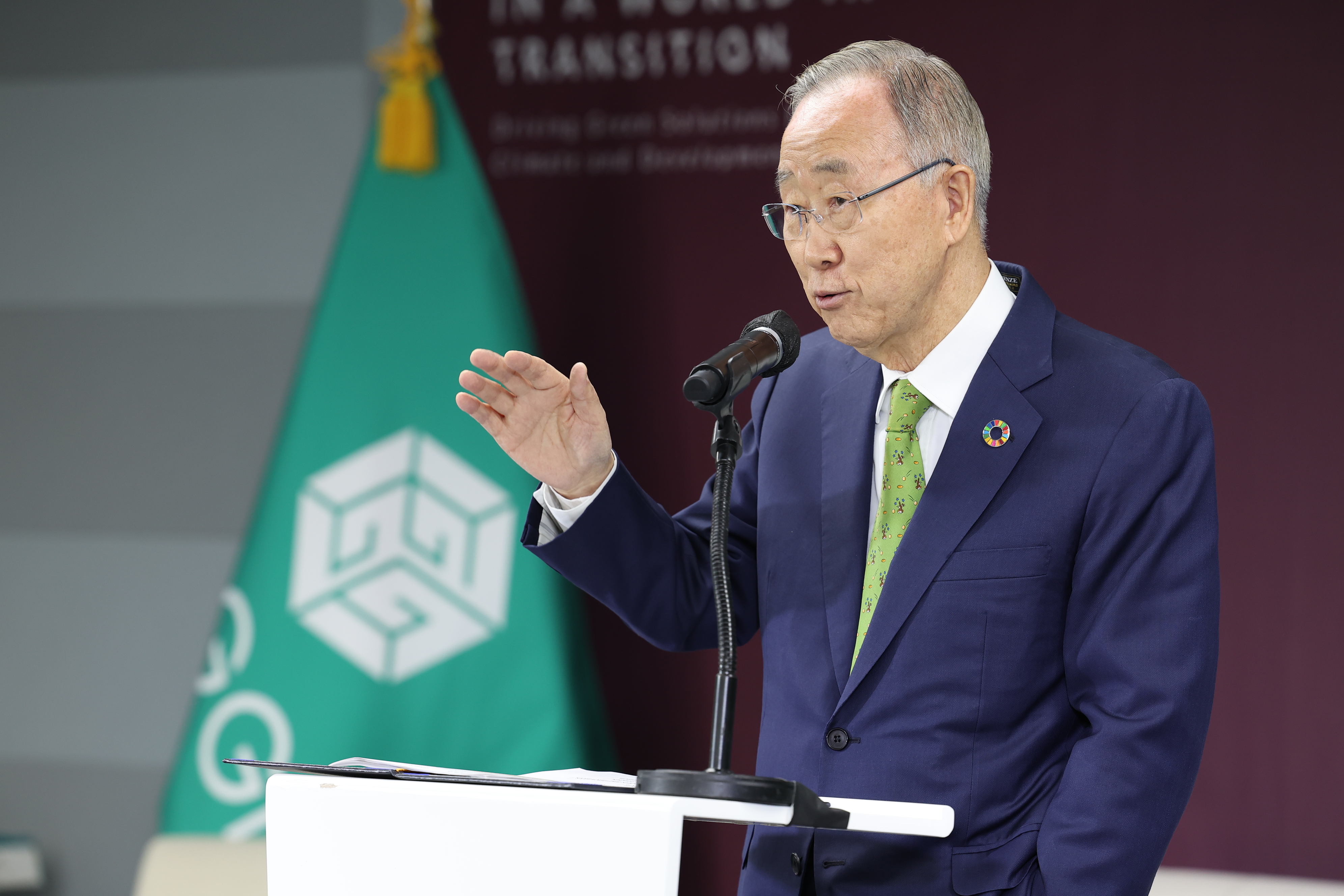
GGGWeek 2025
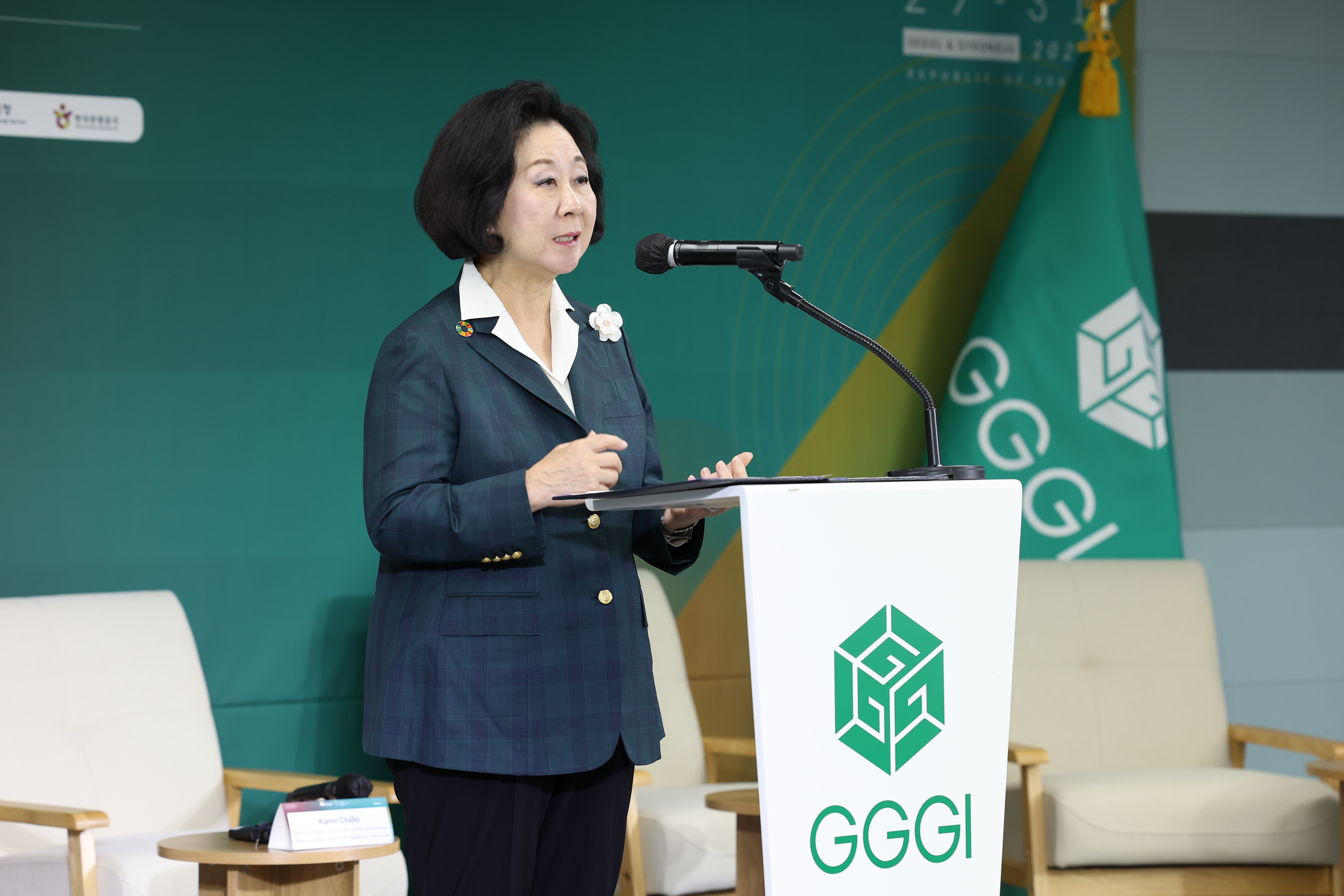
Professor Emeritus Eun Mee Kim from Ewha Womans University elevated the conversation by linking digital transformation and youth engagement to gender equity. She noted that without action to include women and girls in science, technology, engineering and mathematics (STEM) and AI, digital innovation risks reinforcing existing inequality rather than transforming it. “When we educate girls and women, we unlock creativity and talent that benefits all,” she said. Her remarks emphasised that inclusion in education, employment and decision-making requires consistent commitment from institutions and leaders.
GGGWeek 2025
Together, the opening remarks showed that youth digital innovation is already needed today, grounded in practical experience and collective responsibility.
Innovation in Practice: Youth-Led Climate Solutions
The session then moved from high-level interventions to youth engagement. The youth innovators shared their own solutions to climate crisis, demonstrating the change from young generation has already initiated.
For Zoë Yeonwoo Choi, a youth climate activist from South Korea, the awareness on climate crisis first came as an overwhelming future, but it evolved into a scientific inquiry. She proposed an innovative solution to address the energy crisis in developing countries by integrating microbial fuel cells into built-up trees to generate sustainable electricity. That research led her to found Us Happy Earth, a startup focusing on plastic recycling and circular economy solutions, and EARTHEMBLE, a youth-led environmental organization for environmental education and collective action. Her appeal to policymakers was grounded and direct: “What we ask from leaders is not charity, but collaboration. When you trust us, invest in us, and work with us, you are planting the seeds of long-term change.” Her experience illustrated the impact of youth leadership and importance of system and network to support it. 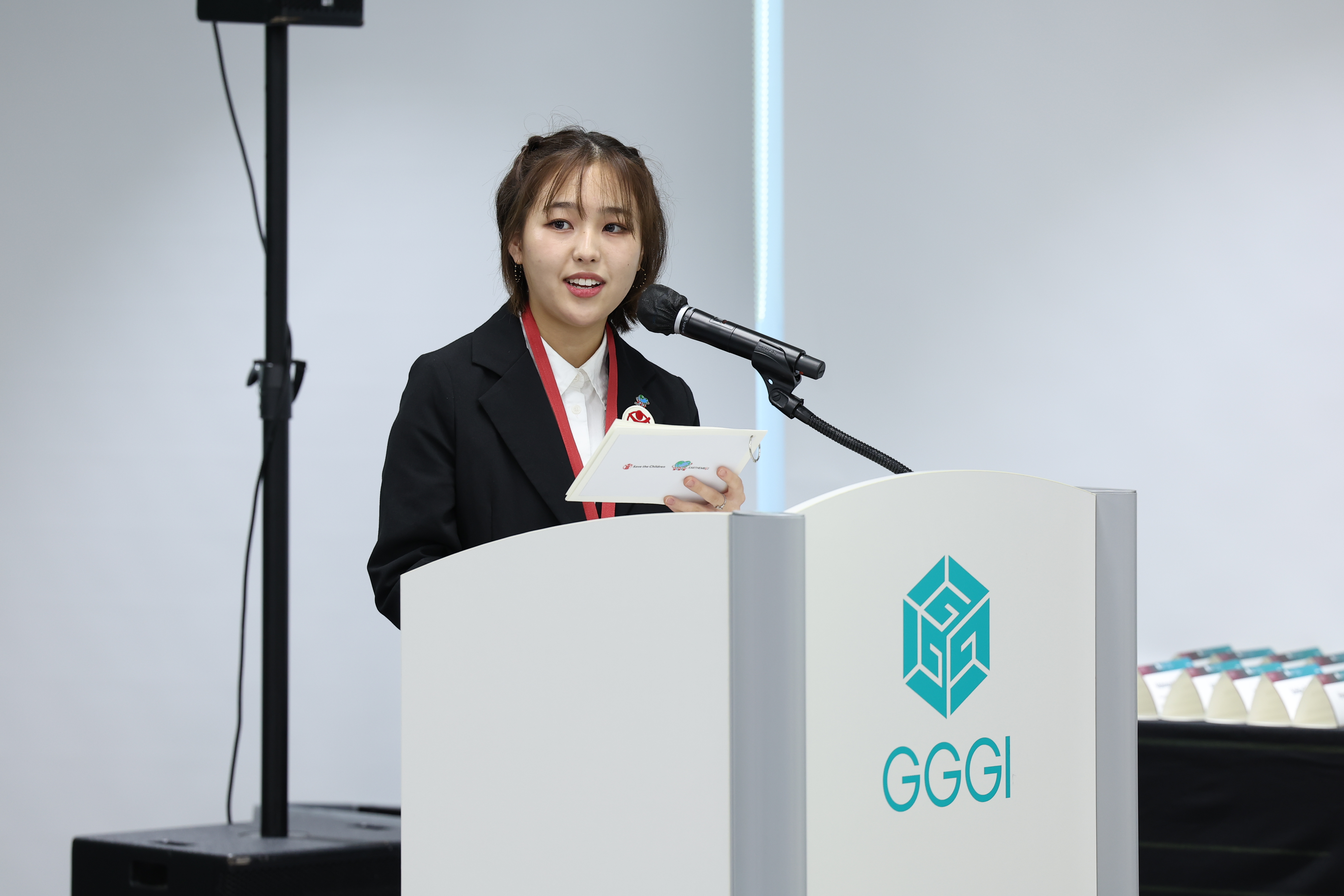 GGGWeek 2025
Heeyeon Kim of the KAIST Graduate School of Green Growth and Sustainability described a similar pathway from study to applied innovation. Working across climate risk and AI engineering, her team developed a borehole siting optimization platform to support drought response in Ethiopia. The project evolved was driven by ongoing discussion between different fields, objectives and interests. “True climate progress needs clear communication, cross-disciplinary teamwork, and most importantly, an open mind,” she reflected. Her experience underscored that innovation advances when different fields engage in sustained and collaborative dialogue.
From Bangladesh, Shubnur Akther spoke of development of the Algae Air Purifier, an innovative device absorbing carbon dioxide and harmful organic compounds without generating electronic waste. Her innovation grew from observing environmental change at home and responding with solutions grounded in nature and science. Meanwhile, she also described the barriers young innovators face: youth voices are often dismissed by officials and investors, and in contexts like Bangladesh, scientific innovation struggles with scarce funding.
Through their contributions, the youth innovators demonstrated not only technical capability but the ability to translate ideas into implementable solutions. Their work raised the critical question that the panel would next address: how can policies, financing structures and institutional arrangements evolve to support this leadership at scale?
Enabling Conditions: From Individual Initiative to Systemic Scale
Following the keynote speech, the panel discussion shifted to the broader systems that allow innovation to take root and expand.
Moderator Robbie McClure, Investment Officer from the Regional Office of Asia, GGGI guided the conversation toward the structural elements required for youth-led digital innovation and AI to accelerate climate action and green growth. Robyn McGuckin, Executive Director of P4G, noted the importance of digital innovation aligning with viable business models, particularly FinTech, for climate startups in emerging and developing economies to succeed. For example, P4G supports an electric bus provider in Nairobi with as pay-as-you-go systems, where automated passenger payments enable both transparency and affordability. “Youth innovators are the ones who will be able to take those solutions to the next step, making them even more affordable,” she emphasized.
Karen Diallo, Director of Digital Transformation of the Administration in Côte d’Ivoire, described how her government is intentionally constructing such enabling systems. Programme d’accompagnement des startups (PADS) in Côte d’Ivoire provides startups training, mentoring and financing whilst labelling eligible startups to participate in public procurement contracts. Government-supported innovation hubs focused on agriculture, climate resilience and energy efficiency incubate young green-tech entrepreneurs. Digital and AI education begins early and continues through engineering levels, with digital capacity-building embedded across the school system. Additionally, Côte d’Ivoire has adopted UNESCO AI ethics guidelines and established data governance strategy to ensure transparency and prevent misuse. These coordinated measures are designed so that young people can develop digital solutions to change the people’s lives better.
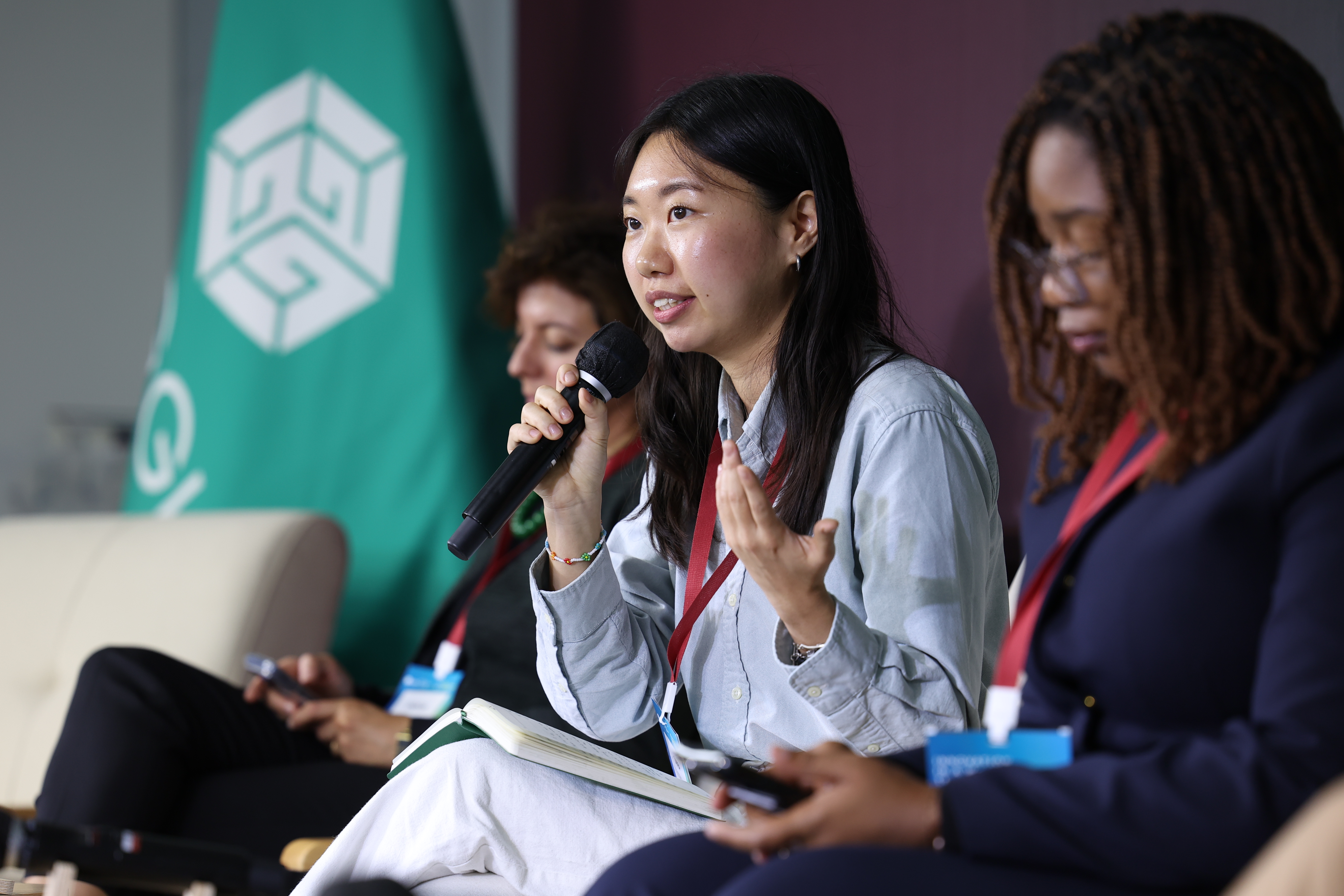
From the global governance perspective, Koeun Lee of the UN Environment Programme (UNEP) Children and Youth Major Group (CYMG) explained how youth advocacy feeds into formal international negotiation spaces such as the seventh session of the United Nations Environment Assembly UNEA-7. Yet, she emphasized that meaningful youth participation requires substantive technical and financial supports from the international organizations and governments, especially for youth in vulnerable regions. She urged to see youth beyond the ticking-box inclusion. Youth participation requires genuine recognition and understanding of diverse youth priorities and needs.
 GGGWeek 2025
Bringing the discussion back to the SDGs, Sara Castro De Hallgren of United Nations Office for Sustainable Development (UNOSD) highlighted three interconnected enablers: (1) closing the digital divide by investing in equitable connectivity paired with green energy access; (2) developing youth through mission-driven training to build innovation and entrepreneurship; and (3) bringing the informal economy into the formal sphere through digital tools and FinTech, so that youth-led enterprises contribute measurably to growth. Her framing positioned digital innovation as a development pathway integral to achieving inclusive, sustainable growth.
Across these contributions, a shared understanding emerged: the challenge is not to inspire youth, but to ensure that systems are designed to work with them, not around them.
Synthesis: Aligning Policy, Investment and Inclusion
As closing remarks, Ingvild Solvang noted that climate and digital transitions are reshaping institutional responsibilities as much as they are reshaping technology itself. Digital tools hold enormous potential, but their value is realized only when supported by strong governance, equitable access and sustained collaboration. The examples from this session, she observed, point to a constructive path forward.
Youth innovators have already demonstrated practical capability in designing and implementing solutions to climate and development challenges. What remains is ensuring that institutions create consistent pathways through policy, investment and skills development for this leadership to be scaled and sustained.
The session reinforced a central conclusion: youth leadership is not a future concept but a current reality. Its continued growth depends on the systems built around it.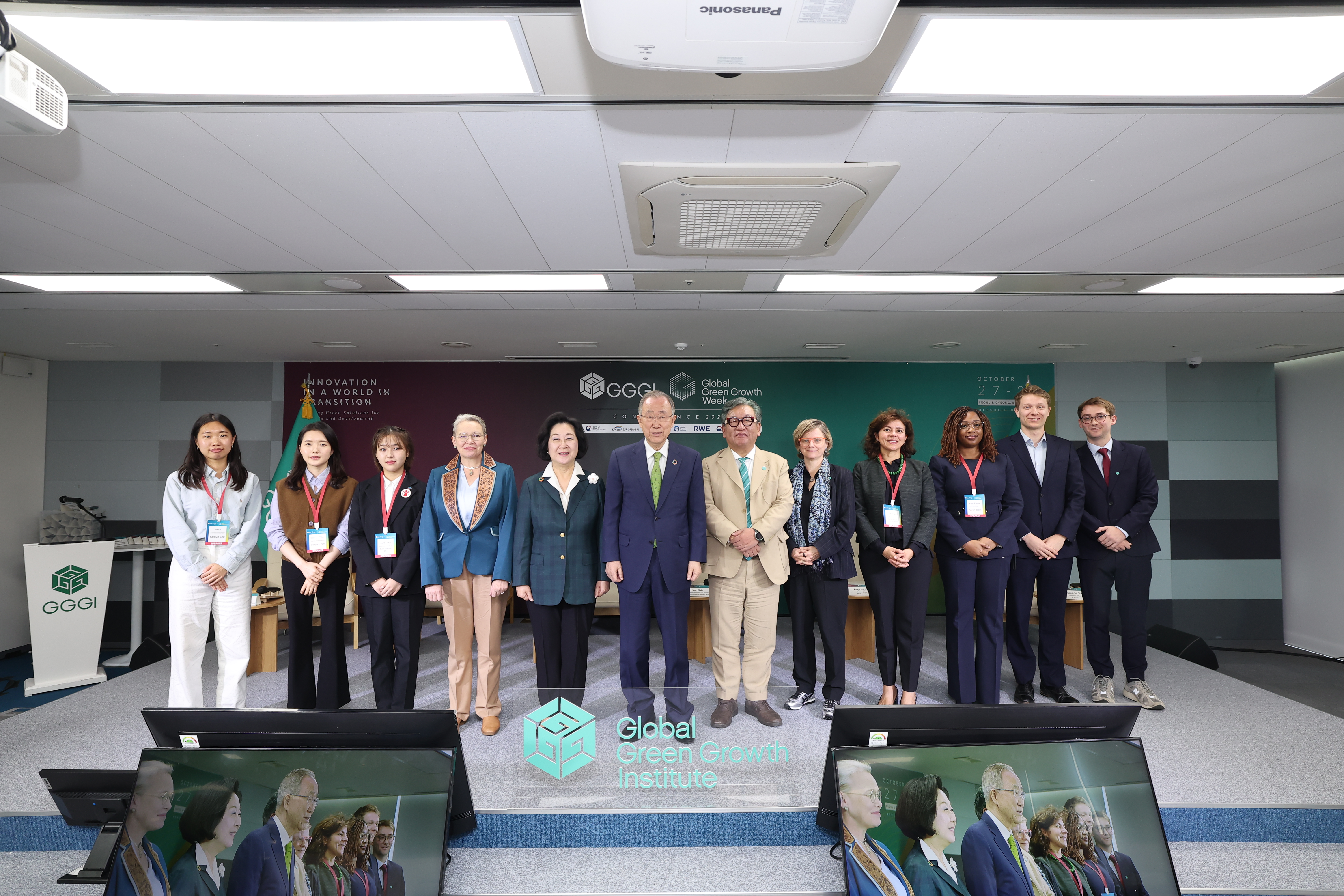 GGGWeek 2025
Photos @ 2025 Global Green Growth Institute
Watch the session recording here: