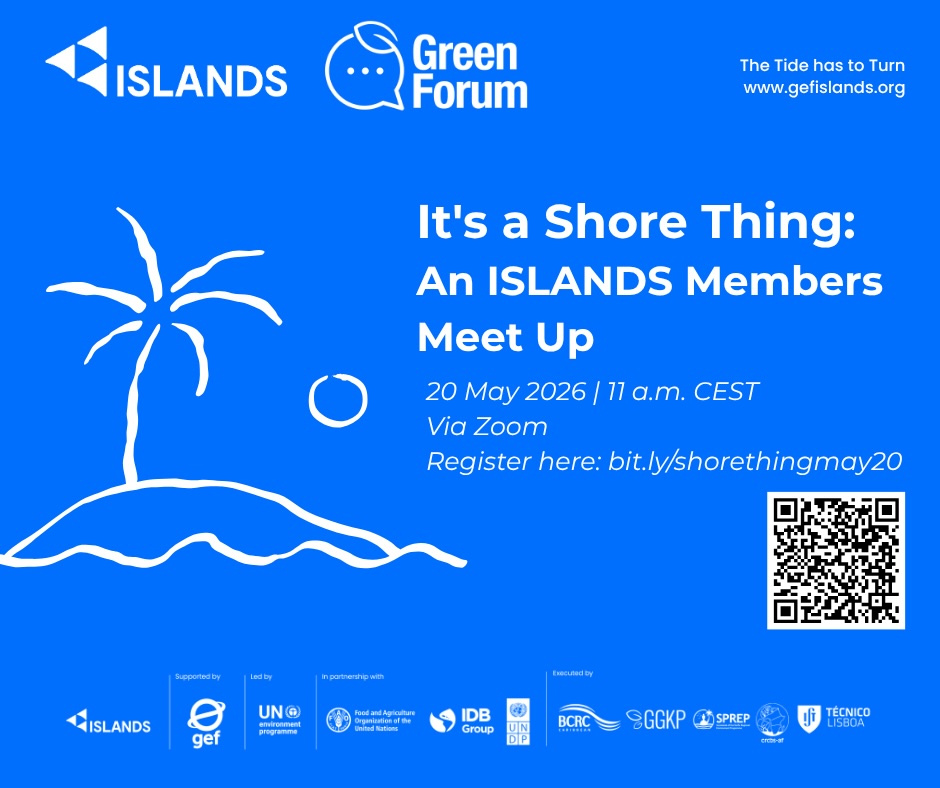
This the virtual collaboration space for the Implementing Sustainable Low and Non-Chemical Development in Small Island States (ISLANDS) Programme. ISLANDS supports thirty-three Small Island Developing States (SIDS) in the Caribbean, Pacific and Indian Ocean to pursue safe chemical development pathways.

Upcoming Events

ISLANDS: Implementing Sustainable Low and Non-Chemical Development in Small Island States

Pinned post
Green Growth Knowledge Partnership(GGKP)

Small Island Developing States (SIDS) are on the frontlines of the global pollution  crisis but they are also leading the way with innovative, practical solutions. How can stronger knowledge sharing and collaboration accelerate action across islands? 📅 25 March 2026, 2-3 p.m. Read More

A post is already pinned to this stream. Would you like to replace it?

It was a busy day today at #UNOC2022. A key topic was making fisheries sustainable and providing access for small-scale artisanal fishers to marine resources and markets. Fish is a key source of food and nutritional security. It ensures livelihoods for 59.5 million people and you might be surprised to learn that small-scale fisheries account for nearly half of global seafood catches - half a billion people are at least partly dependent on them for food, employment and income. They are the largest group of ocean users, which is why they are incredibly important to global food security and livelihoods, as well as being socially and culturally important in many regions.

Despite this, however, small-scale fisheries are often overlooked or ignored, especially in government policy and regulations. They also directly feel the impacts of climate change, are threatened by competition from other industries, lack alternative livelihoods, have weak representation, little control over how diminishing resources are managed, and are typically excluded from decision-making.

In short, the sea and its resources are governed by policies crafted in offices far from coasts and coastal communities, and this needs to change.

A lot needs to happen. We need to address overfishing, and unreported, unregulated and illegal fishing, which means improving overall fisheries management. We need to promote the co-management of resources, equitable and sustainable business opportunities, education and services, and legal measures to protect this. In particular, we need to focus on women - they comprise half the global fisheries workforce yet have less access to resources and services, and bear the brunt of discrimination, as usual.

It's also a personal topic to me: a big part of my PhD research looked at the relationship between the fishing industry, local communities and decision-making processes, investigating how power dynamics influence decisions for sustainability.

So yes, a lot to discuss and a lot to change.

#Fishers #OceanAction #SaveOurOcean #SDG14 #BecauseOceans #onassignment #livingfiercely

Read More

‘When we look at the Earth from space, we see that we are truly a blue planet - the ocean connects us all,’ said António Guterres, UN Secretary-General, at the opening of the UN Ocean Conference.

So here’s how it’s going to work. Over the next four days we’ll have two sessions in parallel: plenary and interactive dialogues. The plenary sessions are for country statements, where countries make voluntary commitments to protect the oceans. The interactive dialogues cover a variety of themes from marine pollution to ocean-based economies, conservation, science and technology, and implementing ocean law.

Let’s be frank: the state of the oceans is not looking good. Over the last century we’ve seen a significant drop in biodiversity, with more than 2.9 million whales killed by the commercial industry, a 35% drop in marine species, with 100 million marine animals dying annually due to pollution, and 320 fish species under threat of extinction.

Marine pollution is one of the biggest problems, both in terms of chemicals and rubbish. Chemical pollution mainly comes from fertilisers in agriculture and other unsustainable waste management (see my #Minamata coverage), leading to algae bloom that is toxic to people and the environment. And rubbish, well, it’s #plastics again: 13 million tons of plastic enter the ocean every year, there are about 50-75 trillion pieces of plastic and microplastics in the water, and research shows that by 2050, plastic will outweigh fish.

There are two solutions: prevention and clean up. We have to stop using single-use plastics and we fundamentally need to change our relationship to plastic as a society. We need policy change, product change, and all the support that comes with that. At the same time, we need to start cleaning up. A lot of plastics are already lost in deep waters, but we need to start cleaning our rivers, waterways and beaches, and we certainly need to address the 1.6 million square km of rubbish known as the Pacific Garbage Patch.

It's time to clean up our act in so many ways.

#UNOC2022 #OceanAction #SaveOurOcean #SDG14 #BecauseOceans #livingfiercely

Read More

United Nations Development Programme(UNDP), Ministry of Ocean and Fisheries the Republic of Korea, UNOSD

On 29 June 2022 (16:00-17:15 WEST), the United Nations Development Programme (UNDP), UN Office for Sustainable Development (UNOSD) and Ministry of Oceans and Fisheries of the Republic of Korea are co-organizing Plastics and Marine Pollution: Innovations for SDG 14.1. This side event at the… Read More

Great article in the Conversation, discusses the ongoing issues with sargassum – the brown stinky seaweed clogging up Bajan and other Caribbean beaches. It looks at the option of a biogas refinery to get rid of the problematic seaweed, generate power, as well as fertilizer by-product that may be used locally, or sold.

Read More

https://theconversation.com/stinky-seaweed-is-clogging-caribbean-beaches-but-a-new-zealand-solution-...

Key Takeaways from the Basel, Rotterdam and Stockholm Convention COP meetings:

Basel outcomes:

- Parties included the full scope of e-waste in its controls and started work on lithium-ion and other batteries. E-waste shipments contain plastic, metals, and potentially hazardous chemicals. For developing countries, e-waste represents a serious health and environmental threat. Now, all countries will have information about what’s in each shipment, and they can refuse it, as the entire e-waste stream is now covered by the Convention.
- Instead of focusing almost exclusively on technical work, parties are using the Convention’s legal mechanisms to respond to waste concerns. The Basel Convention’s plastics amendments make it a central body in the newly-launched negotiations of an agreement on plastics pollution.

Rotterdam outcomes:

- Parties agreed to list two substances—decabromodiphenyl ether (decaBDE) and perfluorooctanoic acid (PFOA) to the PIC Procedure.

Stockholm outcomes:

- Parties agreed to phase-out perfluorohexane sulfonic acid (PFHxS), an industrial chemical used in products such as firefighting foams, stain-resistant fabrics, and grease-resistant food packaging.
- Parties are required to end the use of PCB containing oil in equipment by 2025, and ensure environmentally sound waste management of liquids containing PCBs and equipment contaminated with PCBs by 2028.
- Several developing country parties emphasized that funding for implementation is key to any future agreements to establish a compliance mechanism.
More details in the full ENB report here:

Read More

https://enb.iisd.org/basel-rotterdam-stockholm-conventions-brs-cops-2022-summary?utm_medium=email&am...
UN Environment Programme- UNEP

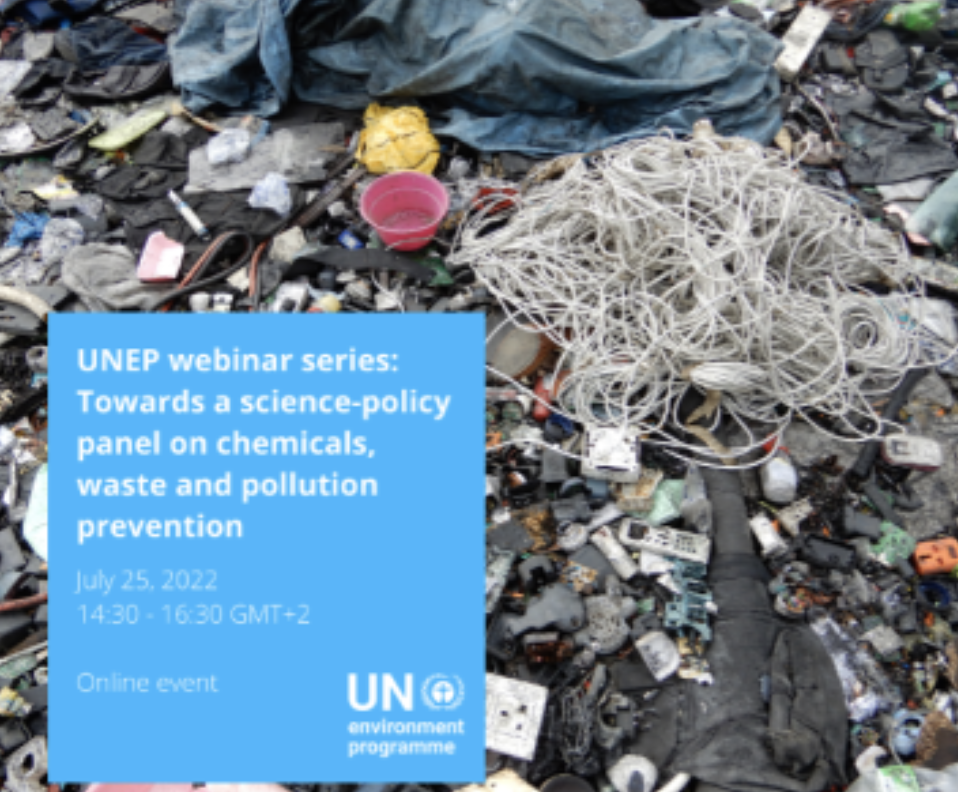
On 23 June 2022 (10:00 AM -12:00 PM CET and 2:00 PM - 4:00 PM CET) the Special Programme Secretariat, in cooperation with the Secretariats of the Basel, Rotterdam and Stockholm Conventions, the Minamata Convention, the Strategic Approach to International Chemicals Management and the… Read More

UN Environment Programme- UNEP

On 29 June 2022 (10:00 AM -12:00 PM CET and 2:00 PM - 4:00 PM CET) the Special Programme Secretariat, in cooperation with the Secretariats of the Basel, Rotterdam and Stockholm Conventions, the Minamata Convention, the Strategic Approach to International Chemicals Management and the… Read More

Please see below webinar from colleagues at the Archipelagic and Island States Forum, with international panel of speakers discussing how maritime governance can be linked with the development of the blue economy to build resilience and strength in archipelagic and island states. Interesting points on the need for improved Port-State control, as well as the need for sustainability in Ports. Also touches on the challenges faced by crew coming from Pacific SIDS, including poor treatment and working conditions and forced labour. Calls for more oversight and accountability in the industry:

Read More

https://www.aisforum.org/feature-articles/zwnf0mntlm311q0xdnsqhsso8stnx6

The Government of Ireland is offering scholarships for early to mid-career professionals from Small Island Developing States (SIDS) to undertake a one year fully funded master’s level academic programme in Ireland.  The eligible programmes for SIDS Fellowships are in the areas of:… Read More

Irish Aid