About this Discussion

The financial system can play a major role in contributing to a transition towards a low-carbon, resilient and inclusive economy. However, for this to happen, three key deficiencies must be addressed:  the misallocation of available capital for long-term development; externalities and systemic risk, including climate change; and environmental stress, notably natural disasters. Critical to aligning financial and capital markets will be measures within the financial system to green private finance through adjustments to key policies, regulations, standards and norms, and through market innovations.

In 2018, the Global Environment Facility (GEF) launched the GEF Aligning Finance Policies project to build international consensus to align financial systems with the UN Sustainable Development Goals (SDGs) and develop national regulatory actions. The project focuses on the development of national Sustainable Finance Roadmaps in six countries – China, India, Kazakhstan, Mexico, Mongolia and Nigeria – and building international consensus on best practices – from policies and regulations to standards and norms – to green the financial system.

This Green Forum discussion is for professionals to share their knowledge and experience on sustainable finance, particularly best practices to help align the financial system with sustainable development and climate change mitigation needs, as well as ways to incorporate sustainability factors into the rules that govern banking, insurance, institutional investment and capital markets.


Supported by

GEF Brand

Upcoming Events

Sustainable Finance

A post is already pinned to this stream. Would you like to replace it?

An exploration of what it could cost for a household to get to zero carbon: if this is of interest to anyone here, my company Zerofy has done some back-of-the-napkin calculations of what it could cost a European household to reach zero carbon. We've included two different scenarios, involving heat pump and EV use, solar energy production, both rooftop and co-op, and investing in wind.

We are interested in any feedback and thoughts on our approach and calculation!

Read More

https://zerofy.net/2022/09/29/cost-of-zero-carbon-life.html

Created a Post in Sustainable Finance
"In battling climate change, waiting is not an option"

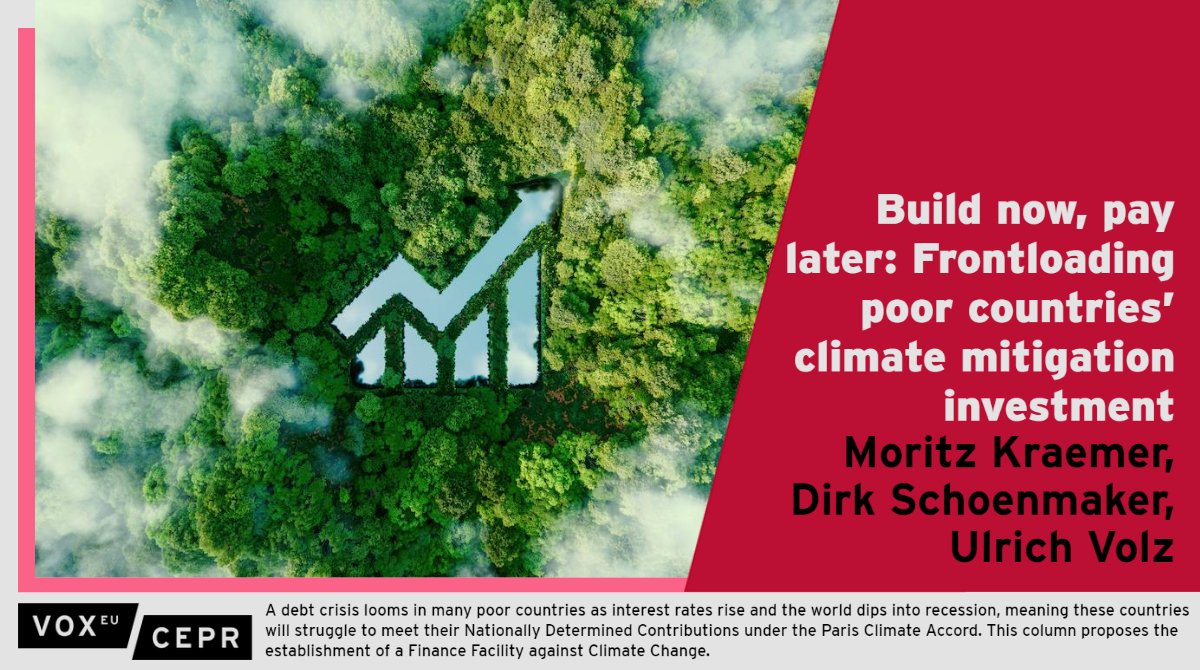
The authors propose a new Finance Facility against Climate Change (F2C2) formed by G20 countries, building on the successful example of the International Finance Facility for Immunisation (IFFIm) that raised funds through bond issuance to finance immunisation programmes in poor countries.

This could allow the necessary frontloading of climate spending in poor countries, while minimising the short-term impact on donor countries’ budgets.

Can this support the developing world frontload emission reductions despite tight budgets and looming debt crises?

Read More

https://cepr.org/voxeu/columns/build-now-pay-later-frontloading-poor-countries-climate-mitigation-in...

What are the drivers influencing sustainable finance development in your country?
What policies and regulatory measures are in place for promoting sustainable finance?

To realize SDGs that fits the national context, it is essential to understand the status of a national financial system and to assess what measures might lead to progress.

Strategic steps for policymakers to understand their national sustainable finance status are outlined in the Sustainable Finance Diagnostic Toolkit.

Have a look at the introductory video of the 10 steps in the toolkit and access it yourselves!

Read More

https://www.greengrowthknowledge.org/diagnostic-toolkit
https://youtu.be/cePJJdwmLew

Central banks rarely feature in fiction, but Kim Stanley Robinson put them at the heart of his recent novel, The Ministry for the Future.

What could be a rationale for putting central banks at the heart of a near-future novel about climate change?

He says, "stabilising money requires stabilising the biosphere." Central banks as the creators and guarantors of money itself and banks can work towards climate and environment within their current mandate.

Read More

https://greencentralbanking.com/2022/09/22/kim-stanley-robinson-central-banks-interview/
Tracy El Achkar commented on Delgermaa Begz's Post in Climate Change, Green Recovery from COVID-19, Sustainable Finance

As we have already recognized that the financial system can play a major role in contributing to the low-carbon transition and green recovery from COVID-19.

How to align the national financial system with these transitions and international best practices?

The Green Finance Platform developed the Sustainable Finance Diagnostic Toolkit to support countries assess the current state of financial system and develop a sustainable finance roadmap - set of key measures and actions.

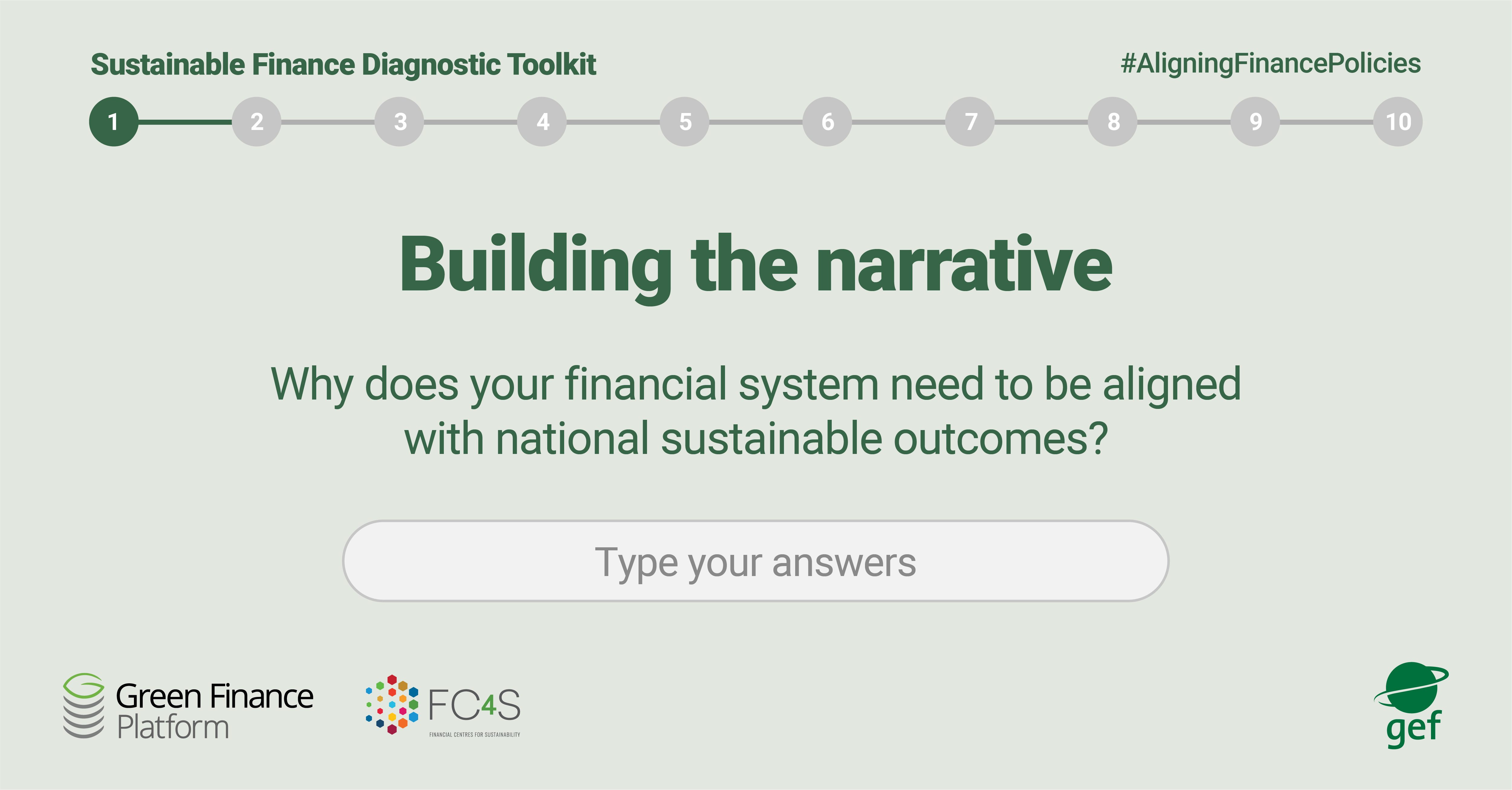
The first step is to understand the importance of your financial system in national sustainable development outcome and how sustainable finance is relevant in the national context.
Countries will have different starting points. For example, one of the drivers of sustainable finance in India is rooted by the necessity to finance one of the most ambitious global renewable energy programmes.

Check out toolkit and find about necessary steps to unlock sustainable finance.

Read More

https://www.greenfinanceplatform.org/news/gfp-and-fc4s-introduce-toolkit-help-countries-develop-sust...

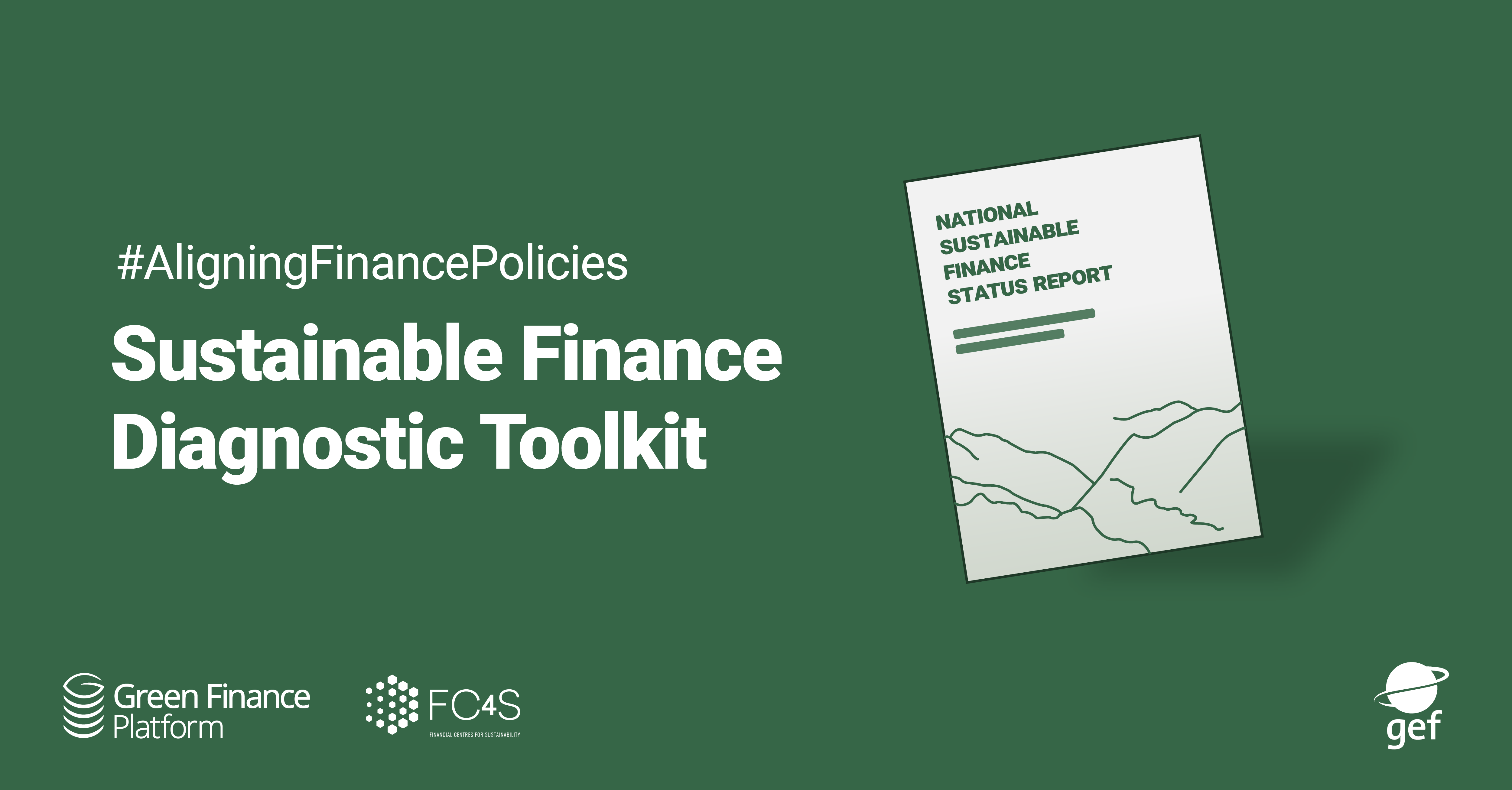
Officially launched today, the Sustainable Finance Diagnostic Toolkit is now available!

The Green Finance Platform and the International Network of Financial Centres for Sustainability (FC4S) launch the Sustainable Finance Diagnostic Toolkit to facilitate the development of a national sustainable finance roadmap.

The toolkit is a 10-step questionnaire that provides practical guidance for policymakers to improve their understanding of actions to enhance sustainable finance mobilization in a country.

Through the toolkit, countries will be able to surface necessary information and measures to unlock sustainable finance, which will feed into the development of national, or potentially regional, sustainable finance roadmaps.

This toolkit is developed and managed by the Green Finance Platform as part of the Global Environment Facility-funded #AligningFinancePolicies project.

Read More

https://www.greenfinanceplatform.org/news/gfp-and-fc4s-introduce-toolkit-help-countries-develop-sust...
https://youtu.be/cePJJdwmLew
| Virtual
Organisation for Economic Co-operation and Development(OECD)

The OECD Forum on Green Finance and Investment is the annual flagship event of the OECD Centre on Green Finance and Investment. Now in its 9th year, the Forum gathers senior policy makers and key public and private actors for action-oriented discussions on green and sustainable finance issues. This… Read More

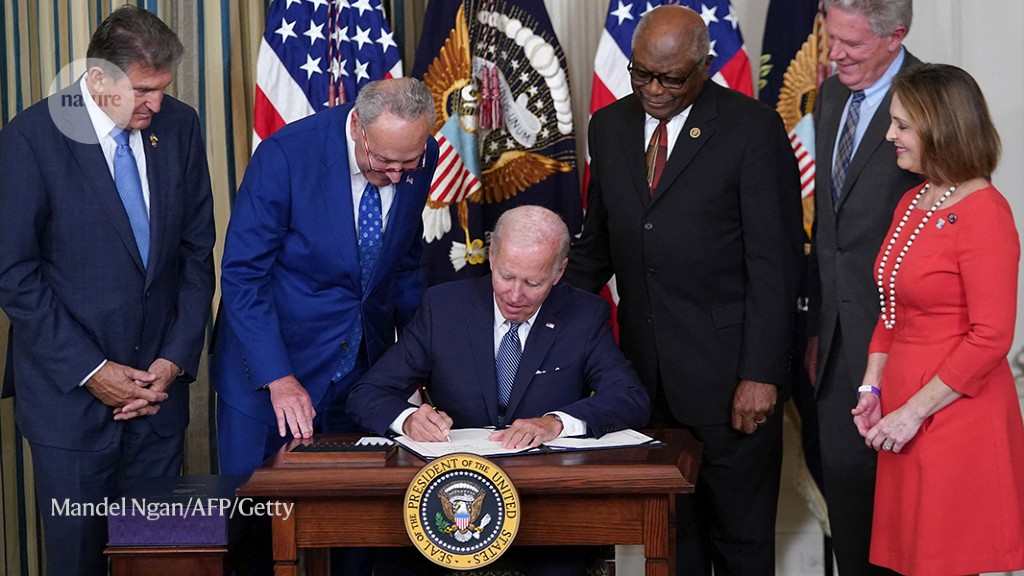
GREAT NEWS: ‘Biggest step forward on climate ever’: US President signs Landmark Climate Bill worth $369 billion to fight climate change!

It is the beginning of the HOPE we have all hoped for.

Let us rejoice and be glad - because this 'landmark climate bill' benefits the entire world, creating that acceleration needed to mitigate against the frequenting GHG emission-induced intense disasters.

Let other Nations follow this beautiful example, why not?

Read More

https://www.nature.com/articles/d41586-022-02223-8
https://www.youtube.com/watch?v=HXoPuzYOdVQ

Last week, the US congress passed the Inflation Reduction Act, the nation's biggest-ever climate bill.

▶️ Can this help accelerate emissions reduction?
▶️ What problems still stand in the way of realizing #NetZero?

"The sooner we acknowledge challenges that accompany net zero as a concept, the better we are placed to accelerate collective efforts to transform societies #ForPeopleForPlanet" - Jonathan Wilson, 10YFP Sustainable Lifestyles and Education Programme

Find out more on #GGKPInsights

Read More

https://www.greenfinanceplatform.org/blog/3-big-problems-net-zero-pledges

Created a Post in Sustainable Finance

Why should private equity take lead in sustainability?

A huge opportunity for private equity—and for society—now exists.

Three forces are pushing ESG in the industry. ESG is becoming more important to limited partners and their beneficiaries, many LPs and GPs believe that ESG will be essential for private equity to continue delivering its historically high returns, and portfolio companies increasing recognize the importance of ESG issues.

As PE-owned companies operate on a longer time horizon, they are relatively capable of making investments without the glare of quarterly earnings calls.

Read More

https://hbr.org/2022/07/private-equity-should-take-the-lead-in-sustainability