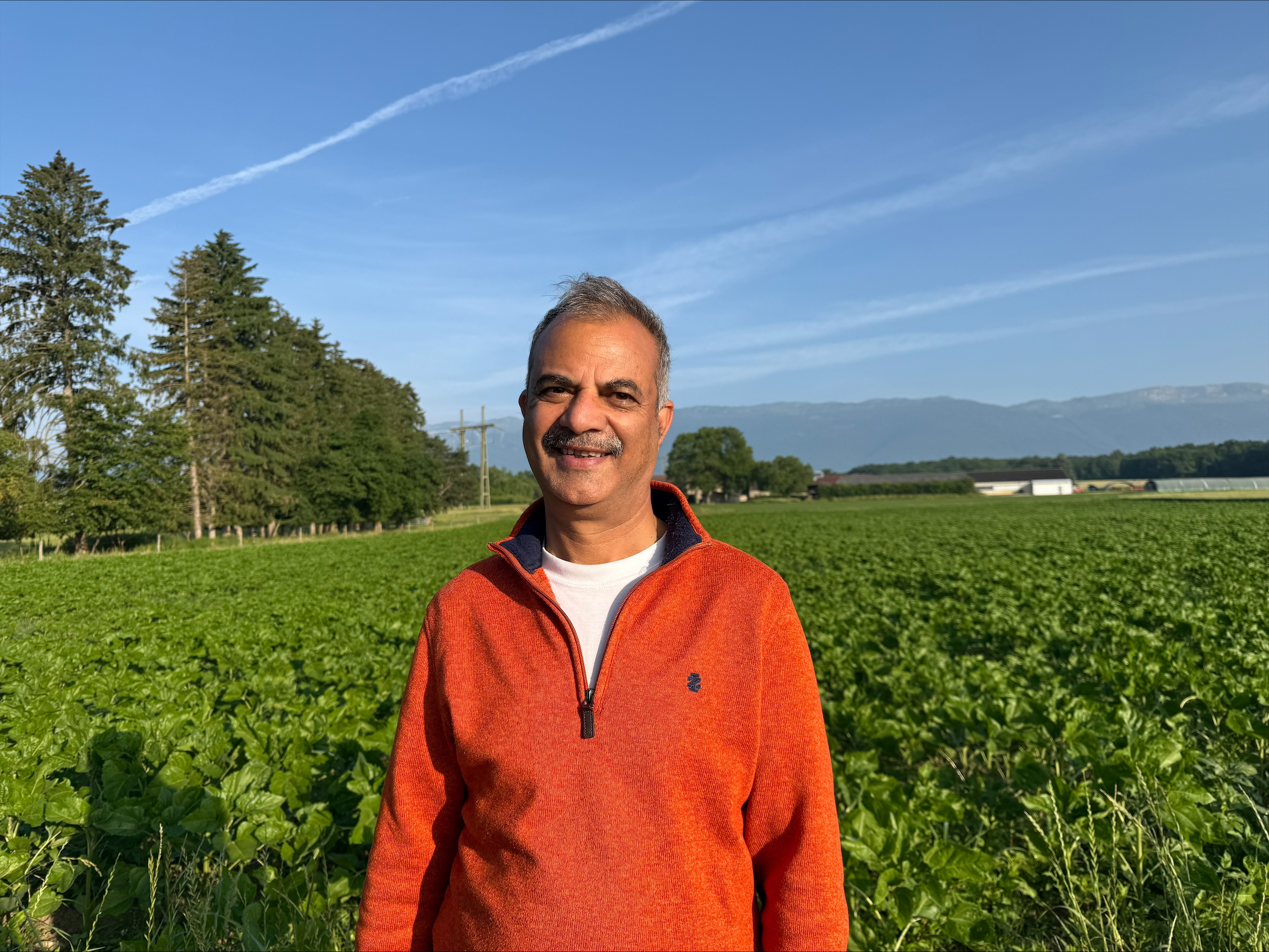
This blog post is based on the remarks of Lars Neumeister (International Pesticides Expert) during the Global Green Growth Knowledge Partnership (GGKP) round table “Activity Options for Action Plans on the Management and Elimination of PCBs and POP Pesticides” held on 16 December 2025.
Substitution: Rethinking Action Plans for POPs Pesticides and Highly Hazardous Pesticides
Efforts to eliminate Persistent Organic Pollutant (POP) pesticides and Highly Hazardous Pesticides (HHPs) often focus on replacing banned substances with new chemical alternatives. Yet decades of experience show that substitution alone rarely delivers lasting solutions. Instead, it frequently leads to new risks, new dependencies, and renewed regulatory challenges. A closer look at the history of pesticide use and current agricultural systems reveals why more holistic approaches are needed—particularly as countries design and implement action plans under their National Implementation Plans (NIPs) to the Stockholm Convention.
A Brief History of Pesticide Substitution
The use of insecticides began well before modern chemical regulation. In the mid‑19th century, arsenic-based compounds were widely applied, particularly in industrialized countries. Although data from that period are limited, historical records show that millions of tonnes of arsenic pesticides were used in Europe and the United States, with lead arsenate becoming the dominant insecticide of its time. These substances remained in use until around 1945.
The discovery of DDT in the 1940s marked a major turning point. DDT rapidly replaced arsenic insecticides over the following two decades and was widely adopted due to its effectiveness and persistence. However, concerns over environmental accumulation and long‑term impacts eventually led to its restriction and inclusion under the Stockholm Convention. From the late 1940s onward, new chemical groups entered the market. Organophosphates and N‑methyl carbamates were introduced and used extensively until the 1970s. During this period, many industrialized countries began banning POP pesticides, but this coincided with the rapid expansion of industrialized agriculture. Hundreds of new active ingredients were developed, and at one point, global pesticide markets offered close to 2,000 active substances. While many of these are now obsolete, a significant number remain in use.
A further shift occurred in the 1990s with the introduction of imidacloprid and other neonicotinoids, promoted as a new mode of action that largely replaced organophosphates and carbamates in the European Union and the United States. Over time, however, environmental concerns led to bans on many neonicotinoids in Europe. Despite these regulatory changes, overall insecticide use continued to increase globally.
This historical progression shows a consistent pattern: pesticides are substituted with other pesticides, often with different toxicity profiles, but not necessarily with lower overall risk. Problems are not eliminated—they are replaced by new ones that were not fully understood at the time of introduction. The more recent emergence of concerns around PFAS‑based pesticides illustrates how new risks continue to surface as scientific understanding evolves.
Why Substitution Alone Fails
Prohibiting hazardous pesticides is a necessary and legitimate regulatory response when substances pose clear risks to human health, groundwater, or ecosystems. However, prohibition alone does not automatically reduce pesticide use. Sales data from Germany illustrate this challenge clearly: total pesticide sales by active ingredient were approximately 30,000 tonnes in 1995 and remained at roughly the same level in 2022.
Over time, individual substances disappeared from the market as approvals were withdrawn, yet they were consistently replaced by other chemicals. This recurring pattern reflects a deeper structural issue. Conventional farming systems tend to substitute one prohibited pesticide with another chemical alternative, often introducing new hazards that were not previously anticipated.
This phenomenon is described as pesticide lock‑in—a condition in which agricultural systems become structurally dependent on chemical inputs. The lock‑in operates at multiple levels and is observed globally. Farmers become reliant on pesticides not only for pest control but also as tools to manage economic pressure, crop uniformity, and yield stability, Neumeister noted.
The Economic Drivers Behind Pesticide Dependence
In many cropping systems, pesticides—particularly herbicides and fungicides—are not used solely as defensive tools against pests. Instead, they play a central role in an economic and environmental “race to the bottom,” where farmers are under constant pressure to reduce production costs and maximize yields.
Experience from Latin America and other regions shows that farmers are often made dependent on pesticide inputs through market structures, credit systems, and production models. This dependency is reinforced by pricing pressures in global agricultural markets, where competitiveness is based on producing large volumes at the lowest possible cost.
Understanding this economic context is essential for designing realistic and effective action plans under NIPs. Without addressing these underlying drivers, bans and substitutions alone will continue to reproduce the same cycle.
Moving Beyond Percentage Reduction Targets
Discussions on pesticide reduction often focus on broad targets, such as reducing pesticide use by a fixed percentage. However, such approaches overlook the significant differences between crops. Each crop presents unique pest pressures, management options, and levels of dependency on chemical inputs.
A more effective strategy is to focus on crops where pesticide reduction—or even complete elimination—is technically feasible and would have a large impact. In the European Union, cereals and maize account for approximately 50–60% of total pesticide use. These crops cover extensive areas and, importantly, can be grown without pesticides using existing agronomic practices.
If national agricultural landscapes prioritize these crops, substantial reductions can be achieved more efficiently than by spreading efforts across all crops simultaneously. Experience from Switzerland and Germany shows that conventional (non‑organic) farmers have been producing cereals without pesticides for decades. Initiatives such as IP‑Swiss, active since the 1990s, and recent commitments by major retailers like Migros demonstrate that pesticide‑free conventional cereal production is technically viable.
Farm‑Level Measures to Reduce Pesticide Use
Reducing pesticide dependency requires practical changes at the farm level, tailored to specific pesticide functions. For insecticides, functional diversity is key. Increasing biodiversity on farms and introducing spatial heterogeneity—such as smaller fields—helps disrupt pest spread, particularly in large‑scale monocultures.
Herbicide reduction relies primarily on diversified crop rotations and intercropping systems. Mechanical weeding remains a core non‑chemical option. For fungicides, wider rotations, mixed varieties, and spatial heterogeneity reduce disease pressure. Planting genetically uniform crops over large areas creates ideal conditions for fungal outbreaks, while resistant varieties already exist for many crops.
Growth regulators can often be phased out by adjusting nitrogen fertilization and selecting appropriate crop varieties. Additionally, altering sowing times—particularly in arable crops—can prevent certain pest pressures, especially when considering winter versus summer cropping systems in northern regions.
For cereals, these measures are relatively straightforward and were standard practice before the 1960s, when pesticide use became widespread.
Policy Instruments That Enable Change
Farm‑level practices must be supported by appropriate policy instruments. Among these, pesticide taxation stands out as the only instrument shown to significantly reduce pesticide use. Economic signals influence behavior, and taxes discourage unnecessary applications.
There is also a strong link between fertilizer use and pesticide dependency, suggesting that carbon pricing related to fertilization could indirectly reduce pesticide use. At the same time, agricultural subsidies play a decisive role. Global spending on agricultural subsidies amounts to approximately USD 700 billion per year, yet only 1% supports environmental objectives. Redirecting subsidies toward better environmental performance would significantly improve conditions for reducing HHP and POP pesticide use.
Regulatory systems also require reform. Integrated Pest Management (IPM) principles clearly state that pesticides should be a last resort. In practice, this principle is often reversed, with pesticides purchased before crops are even sown. Authorization systems should therefore assess whether a pesticide is genuinely needed as a last option in a specific crop before approving.
Changing Mindsets and Addressing Trade Pressures
Beyond policies and practices, deeply ingrained belief systems present a major barrier. After 60–70 years of routine pesticide use, many farmers—and decision‑makers—struggle to imagine agricultural production without chemical inputs, says Neumeister. Shifting these mindsets is as important as technical solutions.
At a broader level, international trade dynamics exacerbate pesticide dependence. Past policy reforms in Europe and the United States showed that reducing overproduction and setting aside land led to higher prices and significant biodiversity gains. Today, overproduction of cereals, soybeans, and maize drives prices down and intensifies competition, reinforcing chemical‑intensive practices. These challenges cannot be solved at the national level alone. International agreements on agricultural production and trade are needed to avoid undermining farming systems while maintaining fair competition.
Implications for National Implementation Plans
For countries developing or updating NIPs under the Stockholm Convention, several practical lessons emerge:
Focus first on large‑area crops with high total pesticide use and clear technical pathways for reduction, such as cereals, maize, and potentially rice.
Avoid concentrating efforts solely on high‑profile crops like bananas, apples, or grapes, which cover relatively small areas and exhibit much stronger lock‑in effects.
Analyze economic, institutional, and mindset barriers alongside technical options.
Combine regulatory measures with incentives, including subsidy reform and taxation, to support transition.
The tools and knowledge needed to move beyond substitutions already exist. What remains is to apply them strategically, at scale, and with sufficient ambition.
Authored by Lars Neumeister (International Pesticides Expert), curated by Anastasiya Buchok (Senior Knowledge Management Associate, GGKP/GGGI).