Upcoming Events

Financing Agrochemical Reduction and Management (FARM)

A post is already pinned to this stream. Would you like to replace it?

Might be of interests to anyone working on agrochemical issues/projects!

Read More

Nadya Pryana commented on Nadya Pryana's Post in Financing Agrochemical Reduction and Management (FARM)

[Calling all innovators!] Here’s your chance to win the Bernard Blum Award - specially curated for innovative biocontrol products. ???

? The Bernard Blum Award by IBMA is given to innovative biocontrol products that have a high impact on the management of pests or diseases while having a low impact on human health and the environment.

? The jury will focus on the following criteria:

? Scientific Foundation and Merit
? Degree of Innovation
? Contribution to Sustainable Agriculture
? Commercial Opportunity

? Submit your innovations by 31 May 2025!

Read More

https://ibma-global.org/bernard-blum-award/call-for-applications-for-the-bernard-blum-award-2025

Might be of interest to those advocating for safer and healthier alternatives to harmful pesticides!

fgh f

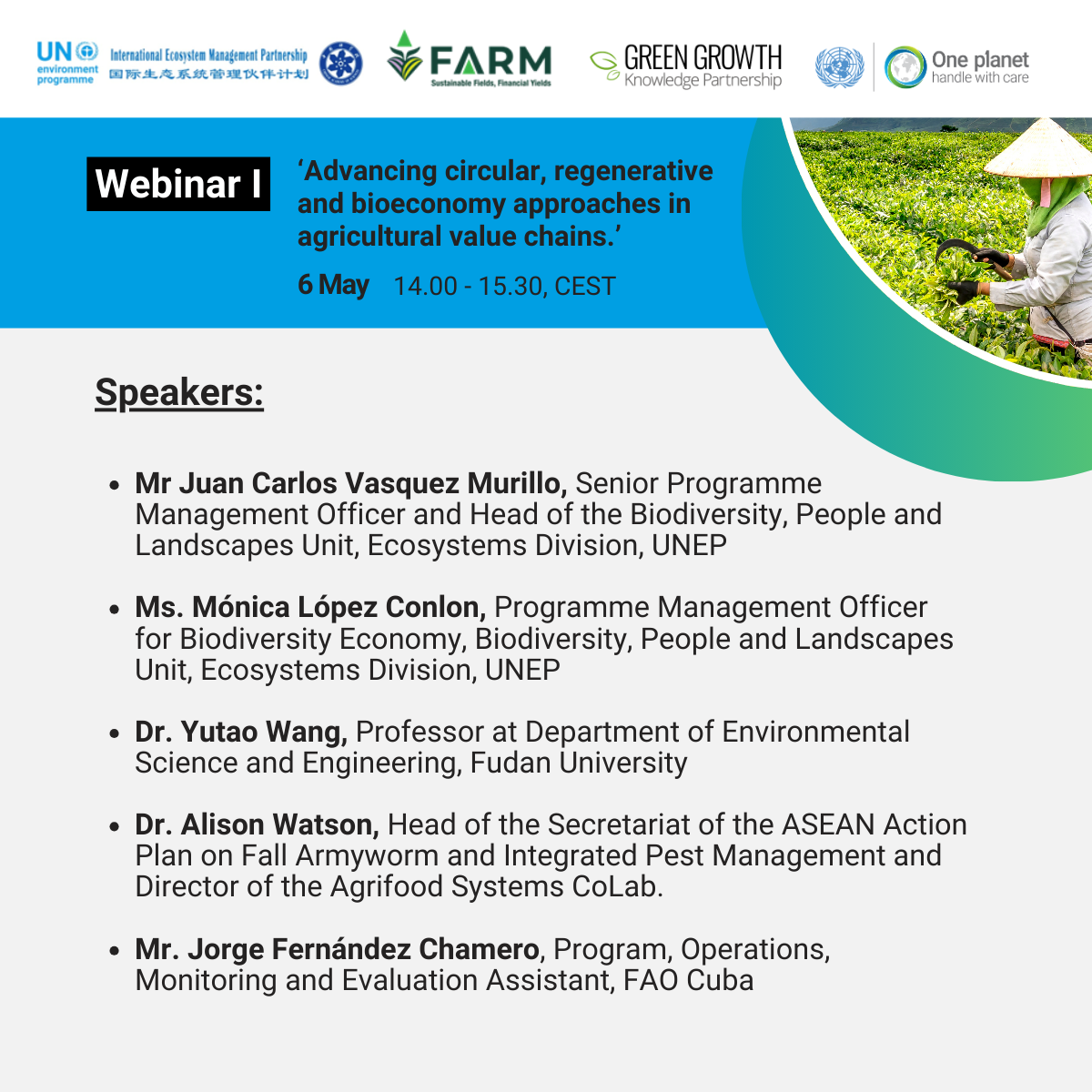
? Webinar Series Launch | "Advancing the Transition to a Pollution-Free Agrifood Industry through Circular, Regenerative, and Bioeconomy Approaches"

This opening session on Tuesday May 6th, 2025 brings together experts from UN agencies and academia to explore how circularity, regenerative practices, and the bioeconomy approaches can support more sustainable agricultural value-chains.

The session will:
? Provide an understanding of how circular, regenerative and bioeconomy approaches can advance a transition to a pollution-free agrifood industry,
? Showcase how these approaches align with sustainable consumption and production patterns,
? Present policy experiences and actions from countries that are advancing circularity,
? Emphasize the importance of an inclusive and just transition.

The conversation builds on the momentum of UNEA-6 Resolution 1, which recognizes the potential of sustainably managed agro-industries—such as sugarcane—to contribute to climate mitigation, biodiversity protection, and pollution reduction.

Read More

Green Growth Knowledge Partnership(GGKP), United Nations Environment Programme(UNEP), Global Environment Facility(GEF), Basel Convention Regional Centre for Training and Technology Transfer for the Caribbean(BCRC-Caribbean)

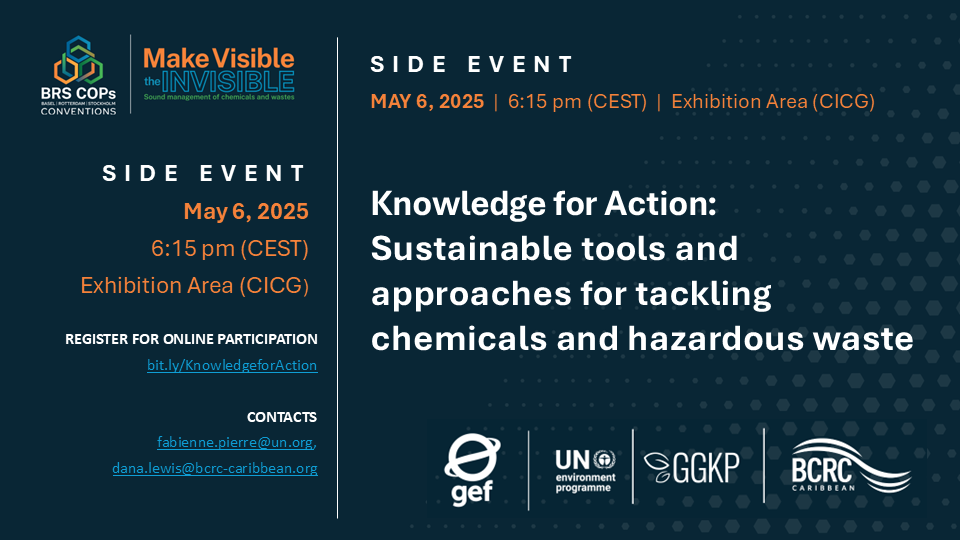
Discover how innovation is shaping chemicals and waste solutions—join our side event at the 2025 Meetings of the Conferences of the Parties to the Basel, Rotterdam and Stockholm Conventions (BRS COPs). This session dives into the power of sustainable tools and digital knowledge systems to tackle… Read More

Nadya Pryana commented on Nadya Pryana's Post in Financing Agrochemical Reduction and Management (FARM)

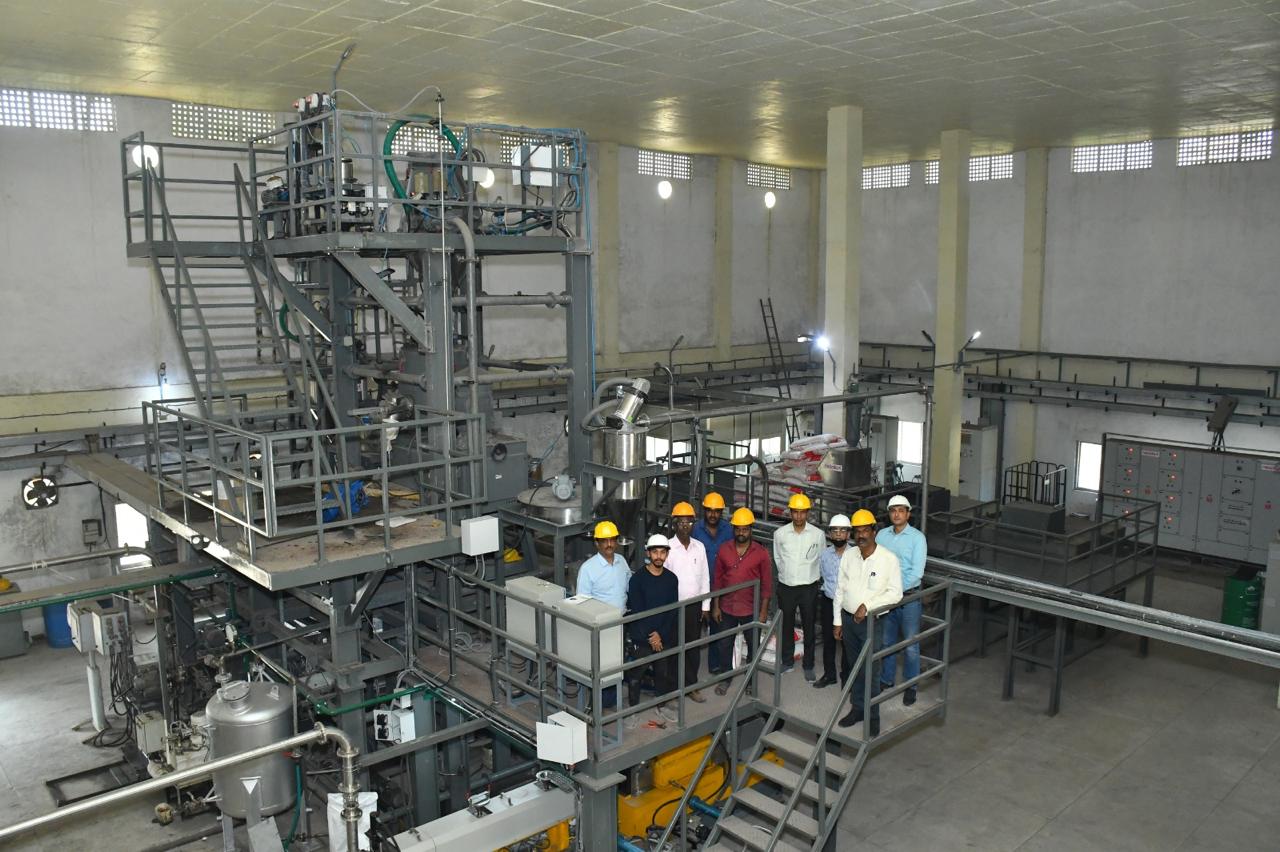
What does India's strategic transition and phase-out of persistent organic pollutants (POPs) look like?

Explore key highlights from the GEF-funded "Development and Promotion of Non-POPs Alternatives to DDT" project.

This initiative marks a crucial first step in long-term efforts to improve the management of agrochemicals and agricultural plastics—efforts that continue today through the FARM project, launched in 2024.

fgh f

? Kicking off the NIP Dialogue Series: Voices from the Countries

We’re excited to launch the series with a powerful first story from India—the world’s last remaining manufacturer of DDT. In this opening piece, we explore how the country is charting a bold and strategic path away from Persistent Organic Pollutants (POPs), while maintaining strong public health outcomes.

Through innovation, regulatory leadership, inclusive community engagement, and public-private collaboration, India offers a compelling example of how POPs can be phased out in practice—not just in policy.

✨ This series will continue to spotlight real-world experiences from countries actively working to develop, review, and update their National Implementation Plans (NIPs) under the Stockholm Convention—bringing country voices, lessons learned, and practical solutions to the forefront.

? Read the full blog here – and stay tuned for more stories from the ground!

Read More

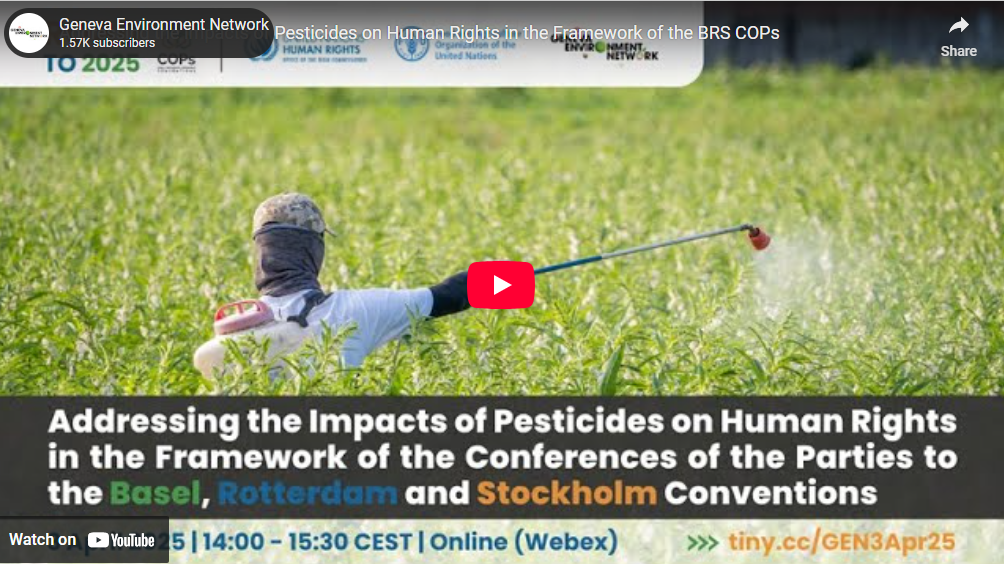
What is your view on the intersection between sustainable pesticide management and fulfilment of human rights? Explore their close linkages in this webinar, co-organized by OHCHR, FAO, the Special Procedures of the UN Human Rights Council and GEN.

Read More

https://www.genevaenvironmentnetwork.org/events/addressing-the-impacts-of-pesticides-on-human-rights...

The Extended Producer Responsibility (EPR) approach plays a key role in addressing plastics pollution. Exploring standards or even mandatory EPR measures for empty containers, unwanted pesticides, and other agricultural plastics, can bring us closer to the ultimate goal of phasing out or improving the management of plastics.

Have you worked on EPR initiatives? What are the most significant enablers in the implementation of EPR solutions?

Resources to dive deeper:
? How to Implement EPR - A guide for governments and businesses https://www.greenpolicyplatform.org/research/how-implement-extended-pro…
? Case example, EPR in agriculture in Canada https://cleanfarms.ca/a-snapshot-of-epr-obligations-on-ag-plastics/

Credit image: FAO

Read More

fgh f

Dear Community Members,

The first meeting of the Open-Ended Working Group (OEWG) for the Global Framework on Chemicals (GFC) will be held from 24–27 June 2025 at the Convention and Exhibition Centre in Punta del Este, Uruguay. The event is open to all stakeholders committed to sustainable global chemicals management, particularly professionals representing governments, industry, health and labour, business and industry associations, academia, and non-governmental associations.

If you would like to register please see the attached PDF invite to the OEWG. If you have any queries please visit our website and contact the GFC via the listed email address.

Read More

Nadya Pryana commented on Nadya Pryana's Post in Financing Agrochemical Reduction and Management (FARM)
Financial institutions have the opportunity to engage in meaningful change and ensure their contributions to pollution reduction and prevention are impactful and lasting. Do you agree?

Pollution risks in the agriculture sector span a wide range of environmental and social issues, including:
❌ Regulatory risks: Growing evidence of the health and ecosystem effects of certain chemicals can generate significant liability risks, potentially leading to restrictions.
❌ Shifting consumer preferences: The rise in demand for organic food reflects a growing consumer focus on health and quality.
❌ Food production challenges: Soil pollution from industrial agriculture reduces crop yields and threatens food safety by allowing contaminants to accumulate in crops.
❌ Human health risks: Compromised air quality and other health hazards linked to harmful agricultural practices.
❌ And many more, highlighting the urgency for banks to drive a transition towards a sustainable, resilient, and less polluting agricultural sector.

So, what opportunities exist for banks?
✅ Innovating sustainable farming practices,
✅ Fostering technology adoption for sustainable agriculture,
✅ Promoting responsible chemicals management,
✅ Strengthening alternatives such as biopesticides and organic fertilisers,
✅And more... if you are an investor or represent a financial institution working in the agriculture sector, share your thoughts and solutions!

At FARM, we are building an investment framework to detoxify the agriculture sector by eliminating the use of harmful inputs in food production systems. Let’s discuss and find a way to collaborate.

Read More

https://www.greenfinanceplatform.org/research/navigating-pollution-blueprint-banking-sector