About this Discussion

Every year, an estimated 11.2 billion tonnes of solid waste is collected worldwide and decay of the organic proportion of solid waste contributes about 5% of global greenhouse gas emissions. Poor waste management – ranging from non-existing collection systems to ineffective disposal – causes air pollution, water and soil contamination. Open and unsanitary landfills lead to contamination of drinking water and can cause infection and transmit diseases. 

The way a country manages its solid waste has significant long-term implications for public health, the economy and the environment. Therefore, it is essential to promote an environmentally sound solid waste treatment and disposal programme. Investing in greening the waste sector can generate multiple economic and environmental benefits. 

Greening the waste sector primarily involves the three “R’s” – reduce, reuse and recycle – with the long-term vision being to establish a circular economy in which the use of materials and subsequent waste is limited, most unavoidable waste is recycled or remanufactured, and any remaining waste is treated so as to minimize environmental damage or even create additional value through recovering energy embedded in material or products.

Upcoming Events

Waste Management

A post is already pinned to this stream. Would you like to replace it?
Geneva Environment Network

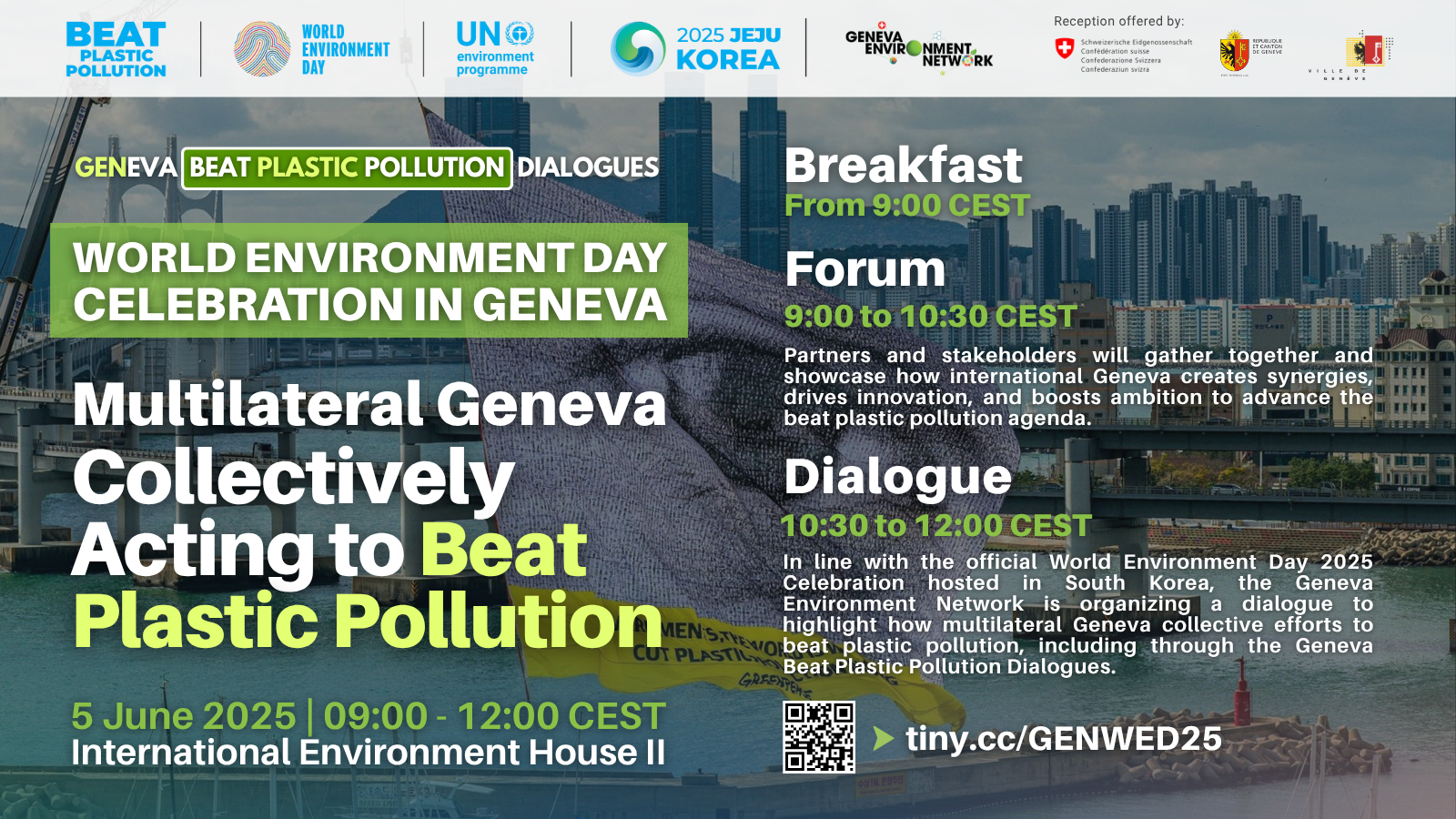
From 9:00 to 10:30 CEST, the International Environment House II will open its doors for the Forum. Partners and stakeholders will gather together and showcase how international Geneva creates synergies, drives innovation, and boosts ambition to advance the beat plastic pollution agenda.Many actors… Read More

UN Environment Programme- UNEP, Global Environment Facility(GEF), Green Growth Knowledge Partnership(GGKP)

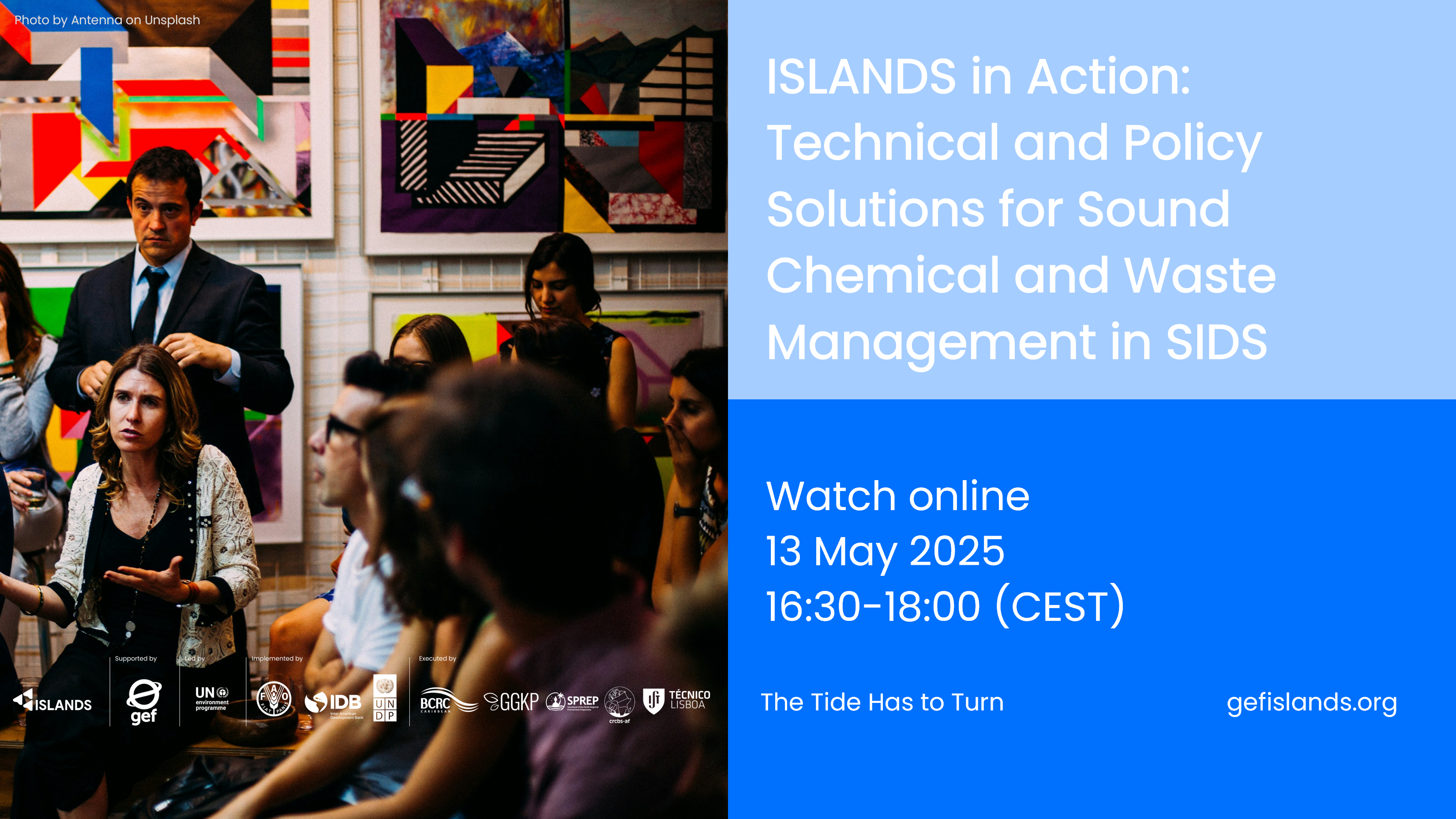
Over 50 delegates from SIDS, international organisations, and the private sector will work for two days of the ISLANDS Forum to exchange and replicate their first-hand experiences in tackling hazardous chemicals and waste.  ?️ Watch live, 13th May, 16:30-18:00 CEST Read More

Karen Lapitan commented on Elga Reyes's Post in Circular Economy, Waste Management

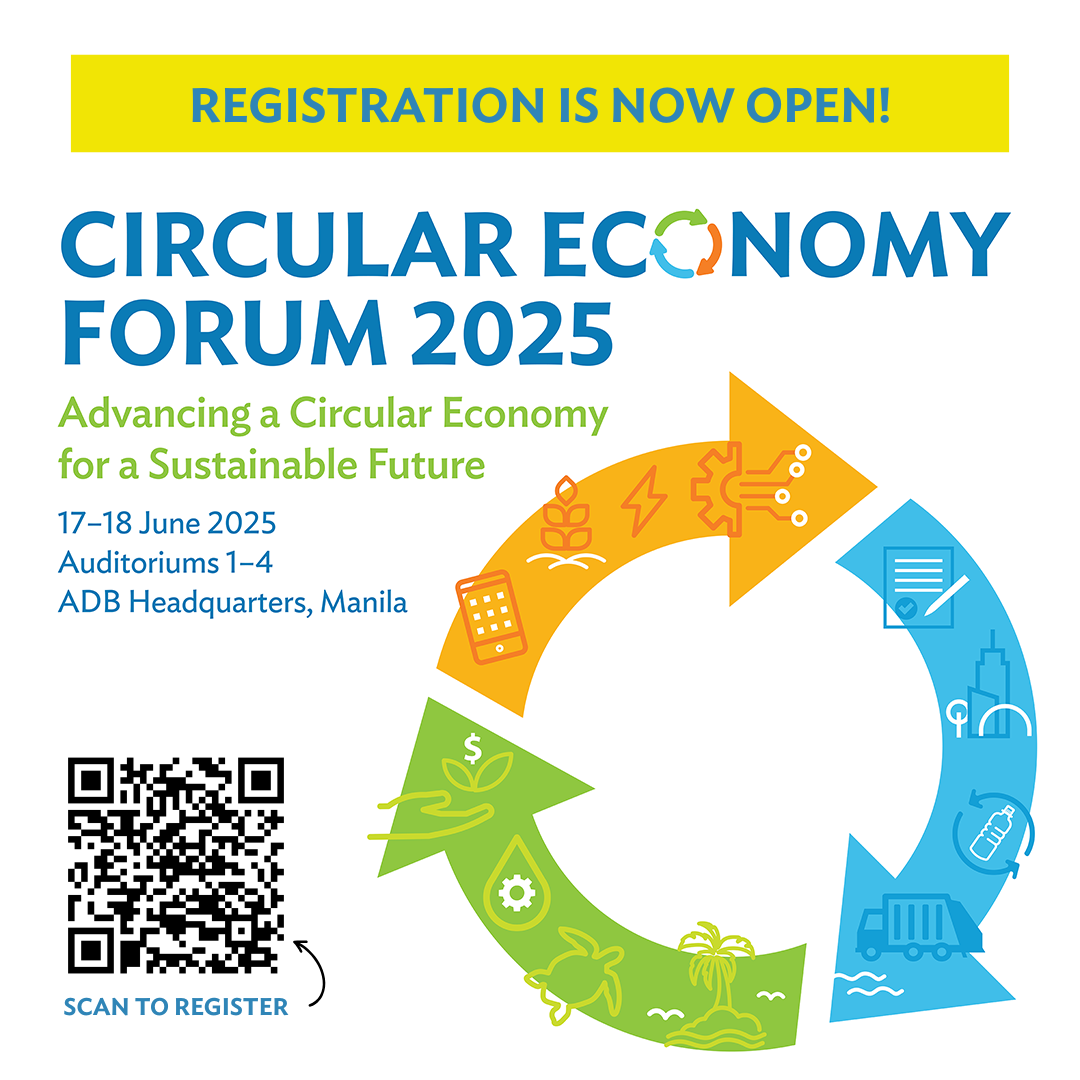
Hello! Join the Asian Development Bank's first ever Circular Economy Forum this June 17–18 at ADB HQ in Manila! Registration is now live. Slots are limited, so be sure to register early at: https://tinyurl.com/join-CE-Forum

Together, let's rethink how we use our resources and advance a circular economy for a sustainable future. ♻️

You can find more details here: https://adb.eventsair.com/ce-forum/

Read More

Default profile image

Shared a Post in Waste Management

fgh f

Good evening everyone,

My name is T and I’m a student at FIU. I recently did an experiment with in my household where I measured the amount of waste that was being inputted during the seven day. I completed this investigation to determine what the real reason was to us having to take out the trash so often. I felt that a lot of different trash accumulated because my family and I do not use a lot of reusable products.

I attached the slideshow to provide a little bit more insight, and I would love some feedback. Since this experiment, my family and I have a greed to cut down on the amount of waste, re-create, by implementing reusable items. Please let me know what type of reusable items you have added into your lifestyle, which has made your amount of waste, go down, or if you just noticed a change in the amount of waste, you create yourself.

Thank you so much for participating.

Read More

Created a Post in Waste Management

The Positive Impact of City Cleanups and Zero-Waste Shops:
Building a Cleaner, Greener, and More Connected Community

On March 22, I had the incredible opportunity to organize a city cleanup in Leuven. What started as an initiative to reduce waste and improve the environment turned into a heartwarming experience that showed me the true power of community and collective action. It’s easy to feel like environmental challenges are too big to tackle, but moments like these remind me that every small effort can create a ripple effect for change.

City Cleanups: Revitalizing the Environment and Strengthening Community Bonds

City cleanups, at their core, are about more than just picking up litter. They’re a chance to take responsibility for the spaces we live in and make a tangible difference. During our cleanup in Leuven, I saw firsthand how powerful these efforts can be.

1. Environmental Benefits
As we worked our way through the city, I could see the immediate impact of our actions. Removing trash from parks, streets, and public spaces not only makes the environment look better, but it also helps protect local ecosystems. We kept plastic, litter, and other waste from making its way into our waterways or harming wildlife, and that alone felt incredibly rewarding.

2. Aesthetic and Psychological Impact
There’s something about cleaning up a space that brings an undeniable sense of peace. The transformation was visible, and it felt like we were giving the city a breath of fresh air. For me, there was a psychological benefit, too. Being part of something that made a real difference in our environment was uplifting and reaffirmed my passion for environmental stewardship.

3. Building Community Spirit
What truly made this cleanup special was the sense of community it created. The cleanup wasn’t just about international students like myself. Older volunteers – local residents of Leuven – joined in, bringing a wealth of experience and a shared passion for preserving our city. It was heartwarming to see so many different people coming together for a common cause. We worked side by side, learned from each other, and formed bonds that reminded me how much we can achieve when we unite.

Zero-Waste Shops: Championing Sustainability and Minimizing Waste

While participating in city cleanups helps address immediate waste problems, it’s important to think about long-term solutions too. That’s where zero-waste shops come in. These stores offer us the opportunity to shop more sustainably by reducing the packaging waste that often ends up on our streets, in our landfills, or in our oceans.

1. Reducing Packaging Waste
Zero-waste shops provide a simple yet impactful way to shop more responsibly. By offering bulk products and encouraging reusable containers, these stores help customers cut down on single-use plastics. I’ve personally found that when I buy from zero-waste stores, I feel empowered to make better choices for the environment. It’s not just about the waste I avoid, but also the message it sends to the broader community about valuing sustainability.

2. Encouraging Conscious Consumerism
These shops do more than just sell products – they inspire a shift in how we think about consumption. When we choose to support zero-waste businesses, we challenge ourselves to be more mindful of what we buy, how much we buy, and how we dispose of it. The more I shop at these stores, the more I realize how easy it is to live with less waste and how much joy it brings to know I’m contributing to a cleaner planet.

3. Inspiring a More Circular Economy
Zero-waste shops also encourage a circular economy – one where goods are reused, repaired, and repurposed instead of being thrown away. I love knowing that these stores support local farmers, makers, and artisans, fostering a sense of community while promoting ethical production. Shopping sustainably feels like being part of a larger movement that values both people and the planet.

How City Cleanups and Zero-Waste Shops Work Hand-in-Hand

When I think about city cleanups and zero-waste shops, I see how interconnected they are. Participating in a cleanup gave me a deeper appreciation for the importance of reducing waste in our everyday lives. When we clean up our communities, we’re not just picking up trash – we’re also highlighting the problem of waste in the first place. That’s where zero-waste shops come in. They provide solutions for the waste we see and help us reduce the waste we create.

As I saw during our cleanup in Leuven, when people become aware of how much waste exists in their environment, they’re more likely to seek out solutions. Supporting zero-waste shops and making sustainable choices in daily life become part of the solution. It’s a cycle that promotes responsibility, action, and, ultimately, change.

A Future of Clean, Connected Communities

Looking back on our cleanup day in Leuven, I realized how much potential these community efforts hold for making lasting change. Whether we’re picking up trash in our neighborhoods or supporting zero-waste businesses, we are all part of something bigger than ourselves. These small, conscious actions build a cleaner, greener future where sustainability is the norm, not the exception.

The sense of community I felt during the cleanup reminded me that no effort is too small. Whether it’s cleaning up a park or shopping at a zero-waste shop, every action counts. I’m excited for the future – one where communities come together to care for our planet, where sustainable living is accessible to everyone, and where we make a real difference, together.

Read More

Seeking Suggestions!

Sustainability has led to the emergence of many new professions across industries. Can you suggest some name of professions (list) that have evolved due to sustainability challenges and initiatives?

Read More

Created a Post in Waste Management

Your expertise is needed on emerging trends in circular solutions for wood waste!
We’re excited to invite you to participate in the Horizon Scanning survey for the HEU Wood2Wood Project ? https://link.webropolsurveys.com/S/3E54D528D014DC2B

Why does this matter?
Wood waste from construction, demolition, and furniture is a growing challenge. The Wood2Wood project is tackling this head-on by exploring adaptive cyber-physical sorting systems, bioremediation technologies, energy valorisation, and digital product passports to track materials across value chains. But to drive real impact, we need your insights.

What’s this survey about?
We’re mapping emerging trends that will shape the future of circular wood waste solutions - and their impact on labour markets, education systems, and organisations. Your expertise in sustainability, innovation, policy, and socio-technical systems can help us identify the skills and strategies needed for a successful circular transition.

Why you?
If you work in circular economy, waste management, sustainable design, or future skills development, we’d love to hear your thoughts. Your input will help shape policies, business models, and workforce strategies for a more sustainable future.

Take the survey now and share your vision!

Read More

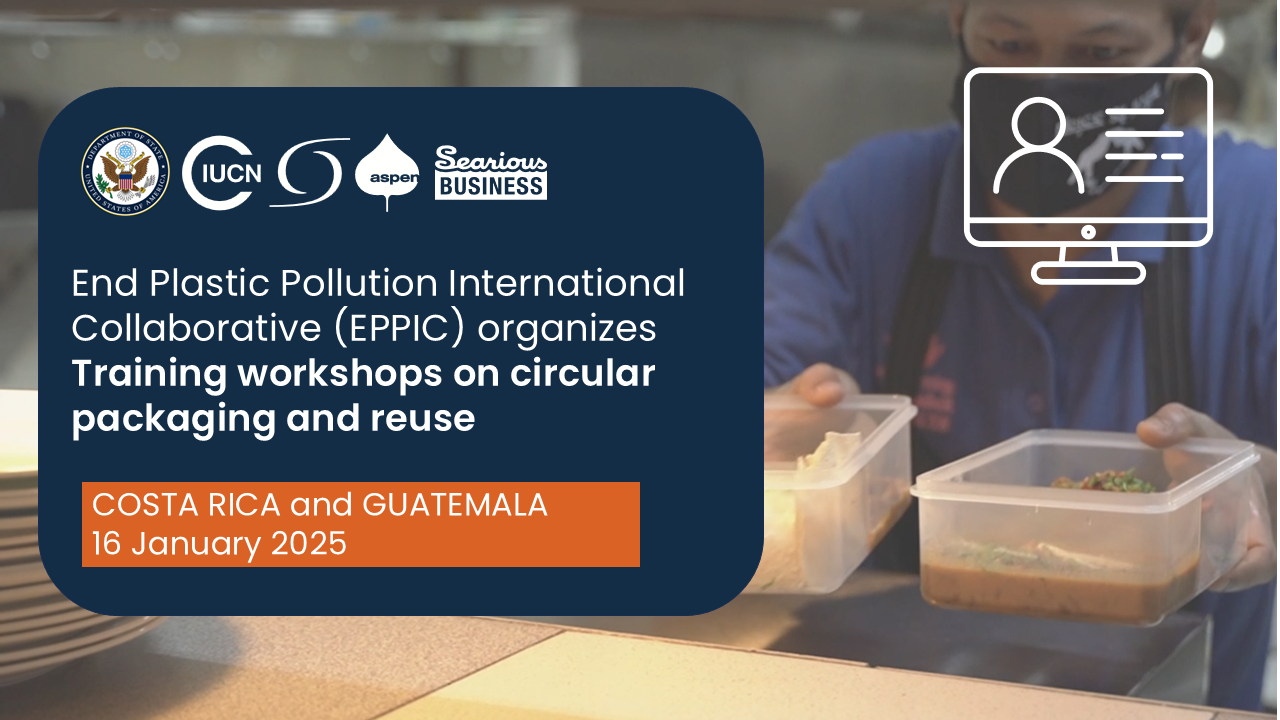
?⏱️Last chance to register for the Costa Rica/ Guatemala Circular Packaging and Reuse Training Workshop! ⏱️?

Are you a medium or small business owner in the packaging, food, retail or logistics industry? We're excited to announce our series of FREE interactive online workshops on circular packaging and reuse hosted by
Searious Business on behalf of EPPIC (End Plastic Pollution International Collaboration)

?Starting in Costa Rica and Guatemala on January 16th, 2025!

? What to Expect:
Learn about the Circular Economy and opportunities for reducing plastics and packaging.
Explore different reuse systems and how legislation could affect your business.
Gain insights on making reusable packaging work in practice, including barriers, levers, and critical success factors.

More countries to follow! See www.seariousbusiness.com/eppic

If you are a small or medium business owner from Costa Rica or Guatemala, don't miss out on this opportunity to enhance your business with profitable and sustainable packaging models! Sign up now and learn how you can be part of the change.

Teams ? https://events.teams.microsoft.com/event/b1d10d8c-ae67-4e13-9775-dd69c9…

(In English with Spanish translation)

#EPPIC_Plastics #EPPIC_Business #endplasticpollution #circulareconomy #reusablepackaging

Read More

http://www.seariousbusiness.com/eppic#helpdesk

Hello!

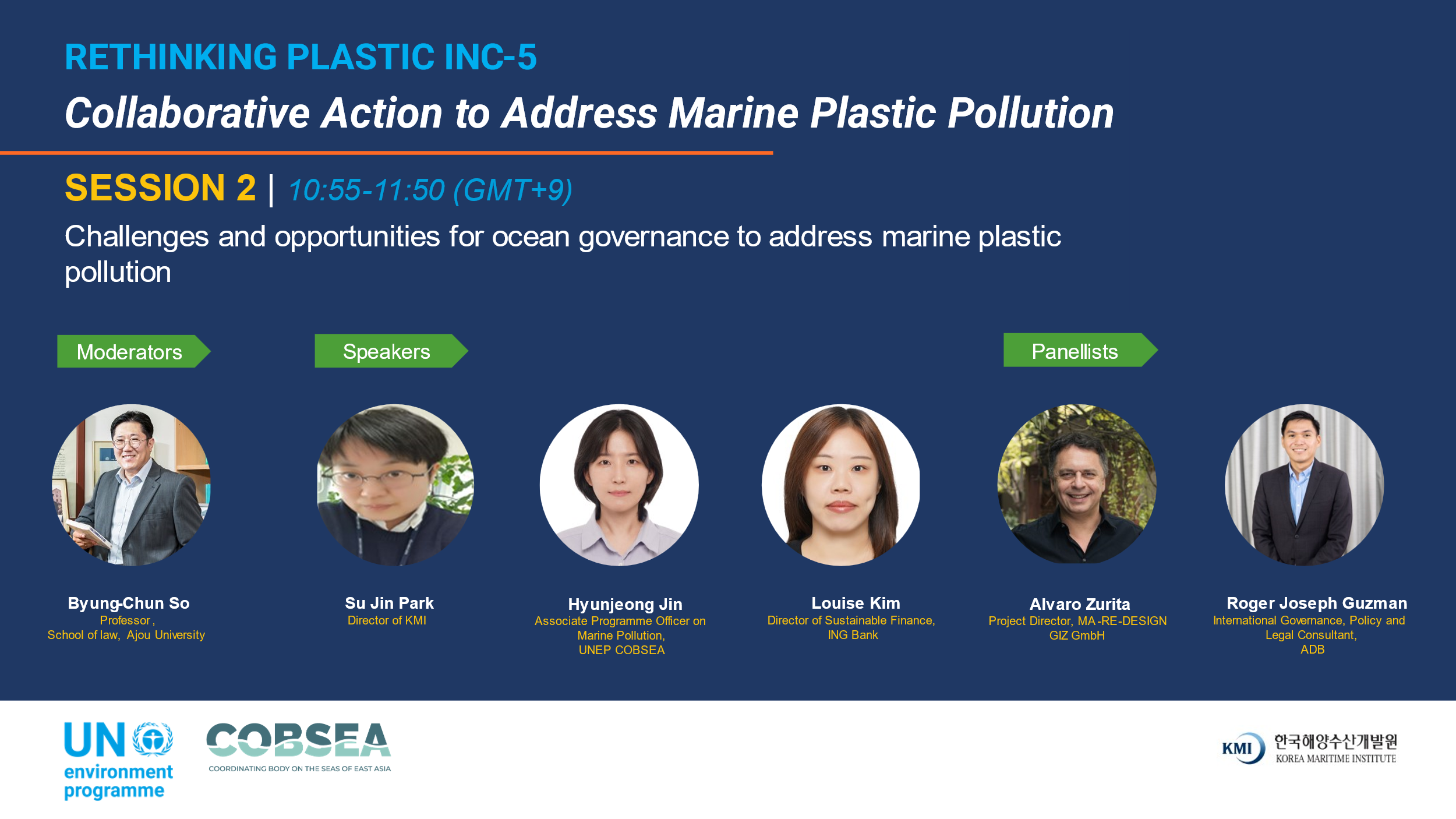
The Asian Development Bank (ADB) is participating in Session 2 of COBSEA's side event tomorrow at INC-5 in Busan, Republic of Korea. The event focuses on collaborative action to address marine plastic pollution, while the session specifically looks into the challenges and opportunities for ocean governance. To learn more about the event, please visit: https://www.unep.org/cobsea/events/workshop/inc-5-side-event-collaborat…

As for ADB's participation at INC-5, more information here: https://events.development.asia/learning-events/adb-participation-fifth…

Read More

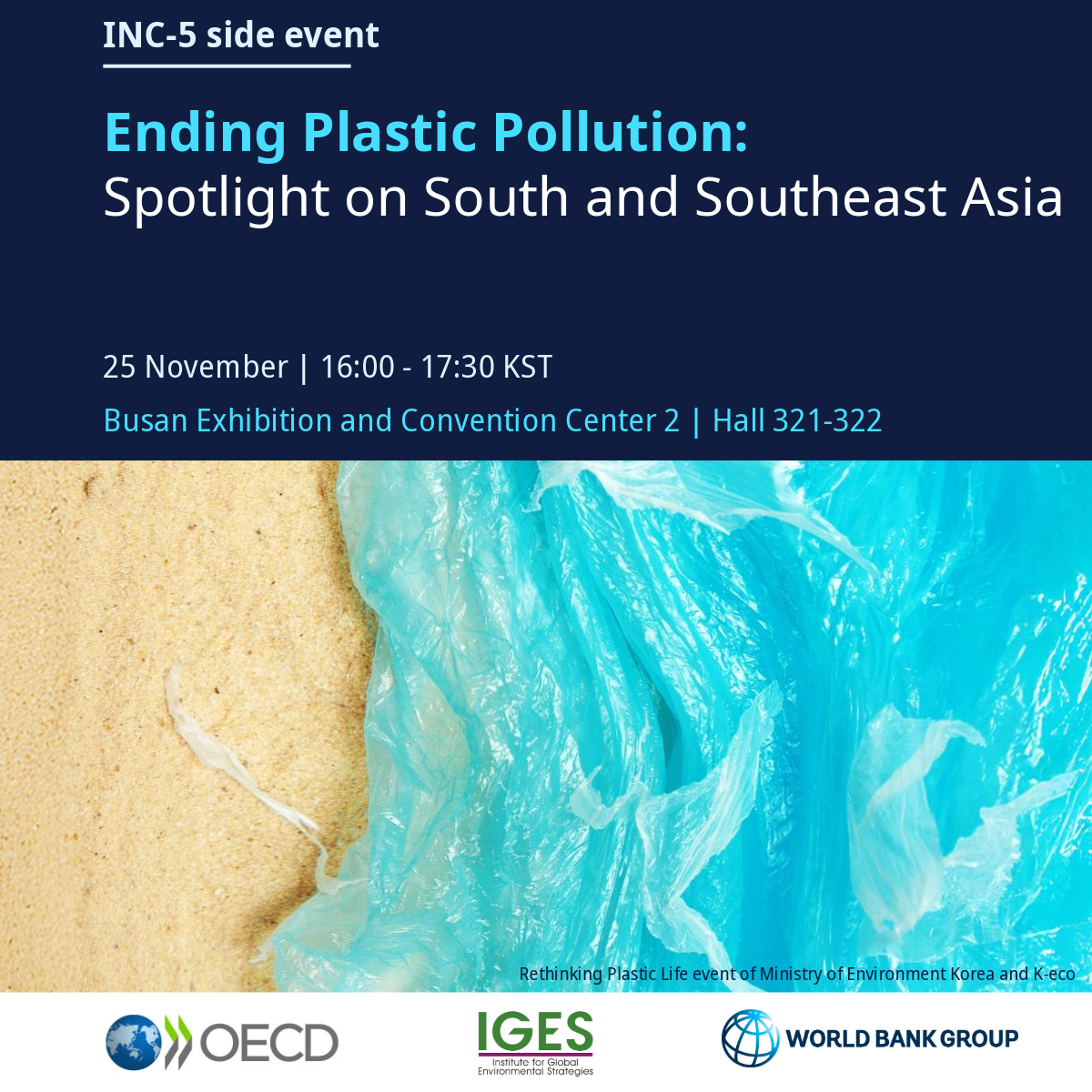
Organisation for Economic Co-operation and Development(OECD), Institute for Good Environmental Strategies, World Bank Group, Rethinking Plastic Life initiative, organised by the Ministry of Environment and Korea Environment Corporation

This event aims to propose strategies to scale up practices and policies to end plastic pollution in Southeast Asia and discuss how their implementation could be accelerated. It will contribute to a better understanding of the challenge of plastic pollution in the region; interventions required to… Read More